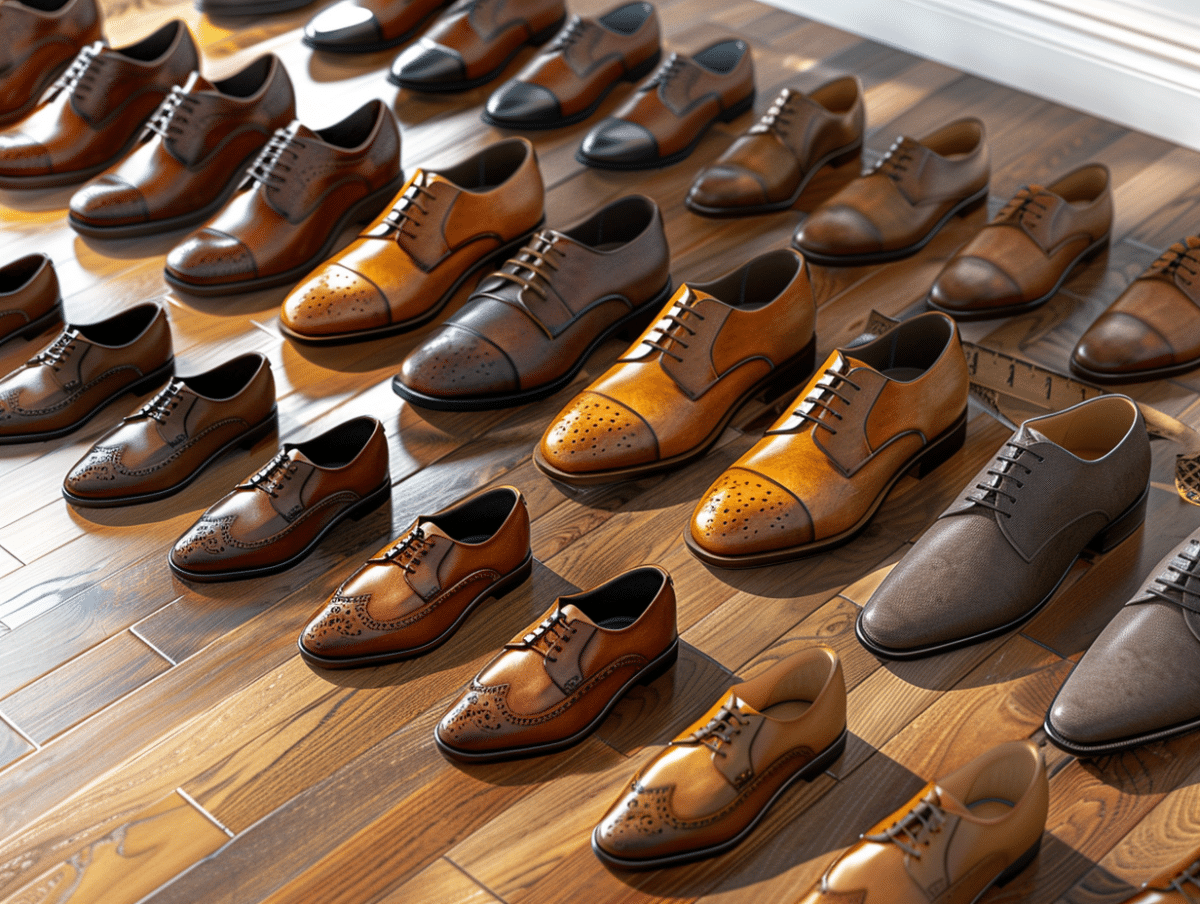
Finding the right shoe is not just a simple metaphor when it comes to selecting the correct size. For men, this choice can be tricky, as an ill-fitting size can lead to pain and posture problems. It is imperative to know your exact measurements and understand the impact of foot shape on comfort. Accurate measuring techniques, awareness of variations between brands and models, as well as consideration of planned activities are essential to avoid common mistakes and ensure optimal comfort.
Understanding the Importance of a Proper Fit for Foot Comfort and Health
The size of shoes, primarily based on foot length, is the first parameter to adjust to ensure optimal comfort. The average shoe size for men should consider not only this dimension but also the width of the foot, which is often overlooked, for adequate support. Shoes that are too narrow or too wide can cause friction, discomfort, and in the long term, deformities or pathologies. Choosing the right shoe size prevents musculoskeletal disorders and ensures better weight distribution.
The material, such as leather, also plays a significant role in shoe comfort. Known for its ability to stretch over time, leather requires choosing a size that accounts for this softening while avoiding an initially loose fit. Keep in mind that synthetic materials, which are less flexible, require a more precise fit from the start to avoid any sizing issues.
In the case of a slight size discrepancy, using insoles can be a solution to adjust the fit. This approach allows for resolving a minor sizing issue by providing additional support and improving the internal comfort of the shoe. Be sure to choose quality insoles that are suited to the shape of your feet and your specific needs to optimize foot well-being and the durability of your shoes.

Key Steps to Choose the Right Shoe Size for Men
The precise measurement of feet is the first essential step to determine the appropriate size. Use a sheet of paper and a pencil to trace the outline of your feet, then measure the longest distance to get the exact length. These measuring techniques, although simple, are the foundation for choosing shoes that will perfectly fit the shapes of your feet.
Familiarize yourself with the Paris Point, a traditional unit of measurement used by European shoemakers, equivalent to two-thirds of a centimeter. Conversion charts, available both in stores and on online platforms, will help you convert these measurements into the corresponding shoe size. Make sure to consult a conversion chart suitable for the shoe brand you are interested in, as size standards can vary significantly from one manufacturer to another.
The fitting remains a decisive step. At a shoe retailer, take the time to walk in the shoes, feel the support, and ease of movement. A professional can assist you in finding the right size, taking into account the specifics of your feet and the cut of the shoes. In the case of online purchases, where the risk of incorrect sizing is higher, prioritize retailers that offer easy and free returns.
With the rise of digital technology, some e-commerce platforms now offer virtual fitting tools or size recommendation based on advanced algorithms. If you choose this route, carefully follow the instructions so the system can best assess your needs. An accurate size guide, often provided by these platforms, helps compensate for the lack of physical fitting and refine the choice of shoe size before purchase.