
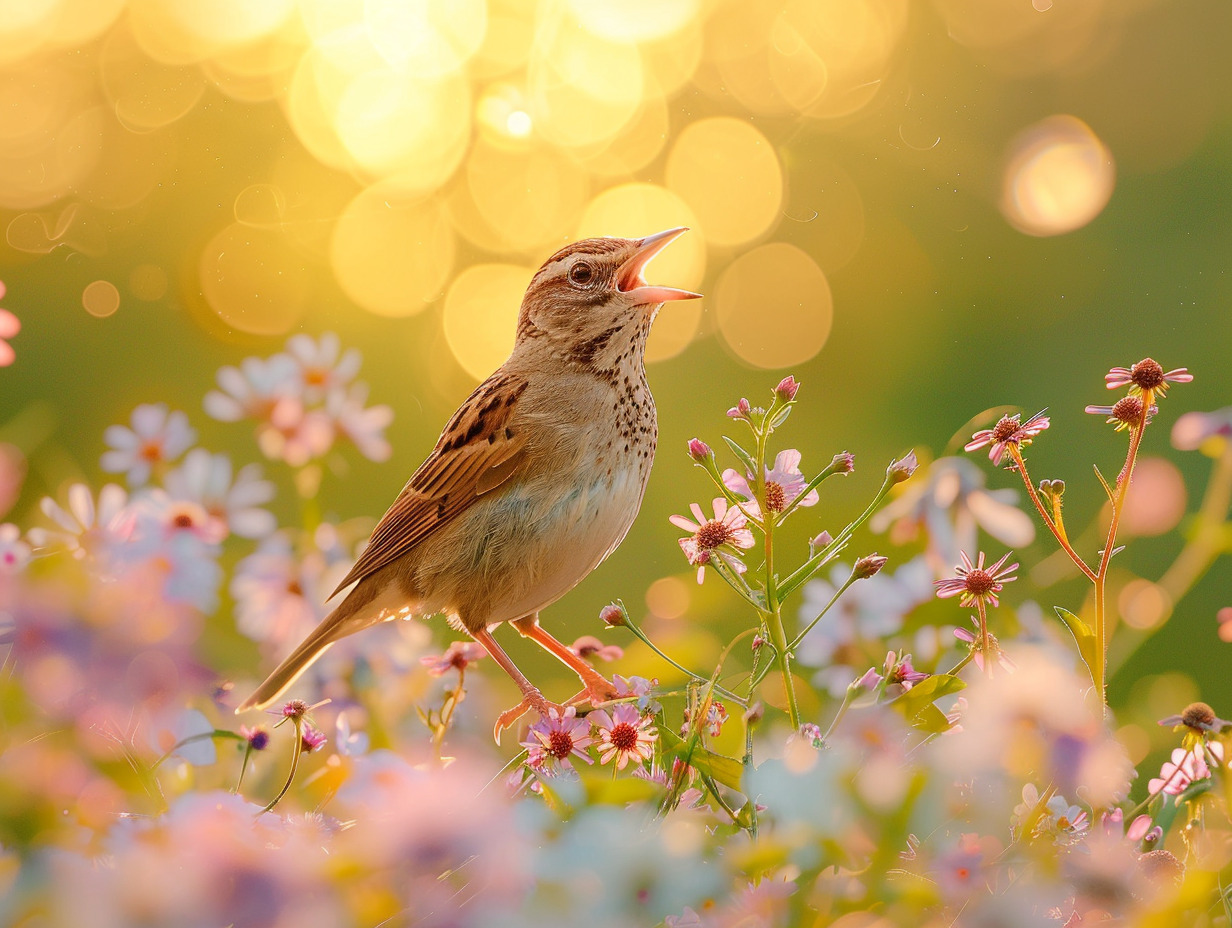
Listening to the songs of birds is a pleasure for the ear and the soul, offering a respite from urban cacophony. These natural melodies have often been perceived as coded messages and omens within various cultures. The interpretation and symbolism of bird songs have thus woven themselves into folklore, literature, and spiritual beliefs around the world. From the wisdom associated with the owl to the morning song of the rooster symbolizing a new beginning, these sounds have become living metaphors, influencing music, art, and poetry, and reflecting the deep connection between humans and nature.
Bird Songs: Between Communication and Mysticism
Bird songs, far from being mere vocalizations, constitute a complex language, an essential form of intraspecific communication for their survival. These sound sequences, which vary from species to species, are tools of seduction, territorial markers, and alarms in case of danger. Ornithologists and bioacousticians decipher these cries to understand their subtleties and functional specifics. The call of the jay, for example, can signal an imminent threat, prompting a reaction of flight or camouflage in other birds. The study of bird communications is fundamental for interpreting their behavior and ecology.
In the realm of mysticism, bird songs are imbued with meanings far beyond their ecological role. Ancient texts such as the ‘Birdcall Texts’ attempt to transcribe these cries into human language, reflecting the intense desire to understand and interpret the messages that nature seems to convey. Divination through the observation of birds, or dāgil iṣṣūrē, was a common practice in ancient Mesopotamia, where people sought to predict the future based on the actions and sounds of birds, sometimes associating them with deities such as Marduk or Adad.
The notion of sound ecology takes on full meaning here, considering the sound environment as a complete ecosystem. Bird songs, key components of this ecosystem, are indicators of environmental health and biodiversity. These sounds, which shape our perception of the natural world, are threatened by anthropogenic disturbances, reminding us of the need to preserve not only bird species but also the soundscape they help create. Birds in nature, through their songs, thus engage us both scientifically and spiritually, prompting a continuous dialogue with the living world around us.
Symbolism and Cultural Interpretations of Avian Vocalizations
At the heart of ancient and modern cultures, avian vocalizations have always been imbued with profound spiritual significance. Their presence in myths and rites manifests an intimate connection between humanity and the world of birds. Mesopotamian texts, such as the Enūma Anu Enlil and the ACh Adad, contain brontoscopic omens, linking divine thunder, often expressed through the cries of birds, to celestial signs. These ancient documents, studied by researchers like S. Ferruh Adalı and C. E. Watanabe, demonstrate how ancient civilizations perceived birds as mediators between gods and men.
In series of Mesopotamian auguries, such as the Šumma ālu, the omens derived from bird behavior are codified and interpreted to guide human destiny. The omens of birds also appear in exorcistic texts such as the Utukkū Lemnūtu, where the flight and song of birds are seen as divine signals. Deities like Iškur, associated with the timbales, resonate with the concept of tirik alê ramīmi, the playing of percussion instruments, evoking a correlation between the sounds of nature and those of human music.
Philosophers and authors have long meditated on the meaning of bird songs. Kant, in his Critique of Judgment, recognizes the beauty of bird song as an aesthetic expression free from constraints. Rachel Carson, in her work Silent Spring, draws attention to the devastating effects of pesticides on birds, thus highlighting the importance of songs as a symbol of environmental health. Aldo Leopold, in his Sand County Almanac, celebrates the value not only ecological but also cultural of the often-overlooked sounds of birds.
Contemporary works by David Abram, notably The Spell of the Sensuous and Becoming Animal, explore the relationship between human perception and the natural environment, advocating for a deeper resonance with bird vocalizations. These songs, which traverse history and cultures, continue to inspire reflection on our place in the natural world and on the ways we interpret and value non-human communications. The significance of birds in cultures remains a fertile field for interdisciplinary research, where ecology, spirituality, and anthropology meet.