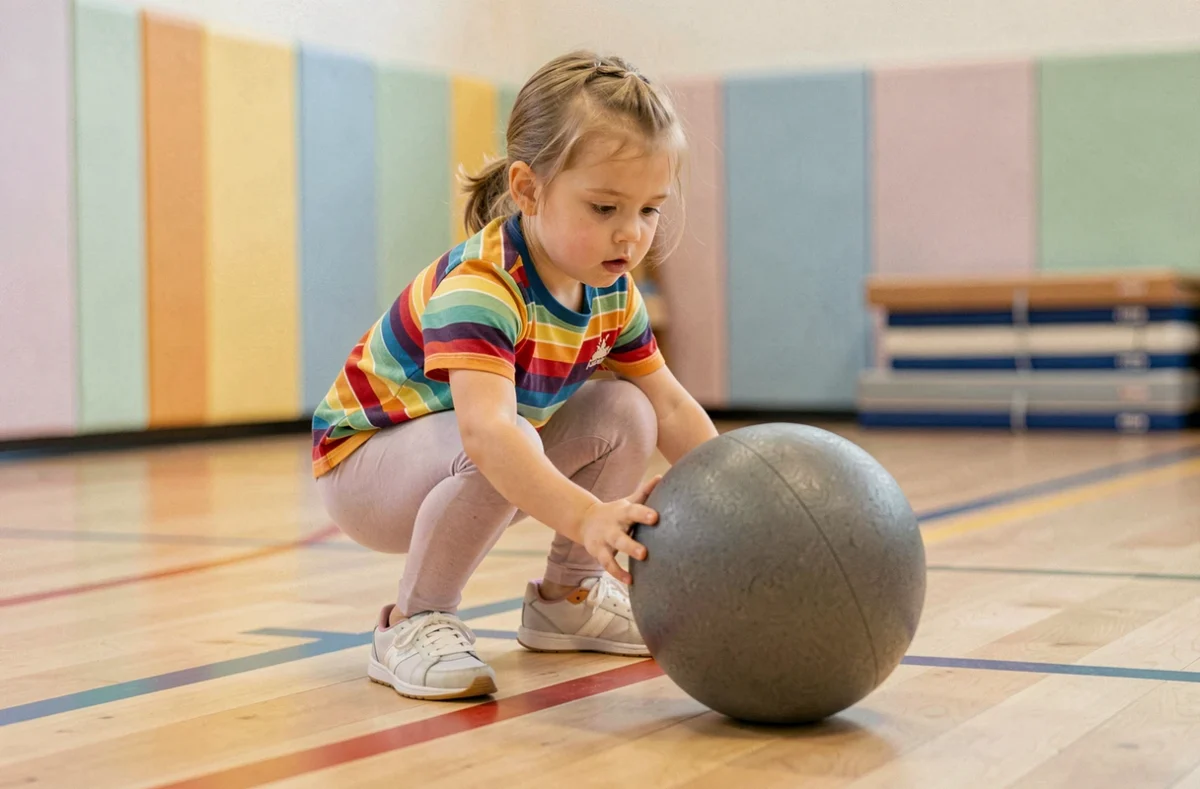
Three years ago, a toddler’s musculoskeletal system cannot tolerate repeated impacts or asymmetric joint stress. Any sports activity proposed at this age is based on the development of fundamental motor skills: balance, coordination, locomotion, and object manipulation. We recommend structuring sessions around these four pillars rather than replicating in miniature the movements of an adult discipline.
Motor Maturation Thresholds and Choice of Sports Activity for Toddlers
An eighteen-month-old child does not exhibit the same postural stability as a three-year-old. The myelination of motor nerve pathways continues well beyond preschool, which limits the capacity for bilateral coordination and segmental dissociation.
Proposing a structured team sport before the age of four ignores this neurological reality. In baby gym or body awareness, the exercises target proprioception and postural adjustments, not performance.
The context of practice is as important as age. A federal club, a commercial structure, and an association do not apply the same requirements.
Since 2022, a medical certificate is no longer systematically required to enroll a minor in most federal disciplines: a health questionnaire is sufficient, except for positive responses or disciplines with specific constraints (diving, combat sports with striking). However, a private structure may maintain the obligation through its own internal regulations. Checking this point avoids unpleasant surprises on registration day.
The programs referenced on baby-sport.fr illustrate this segmentation by developmental stage rather than by calendar age, which remains the right approach to guide families.
Securing the Session: Surface, Supervision, and Duration Suitable for Children
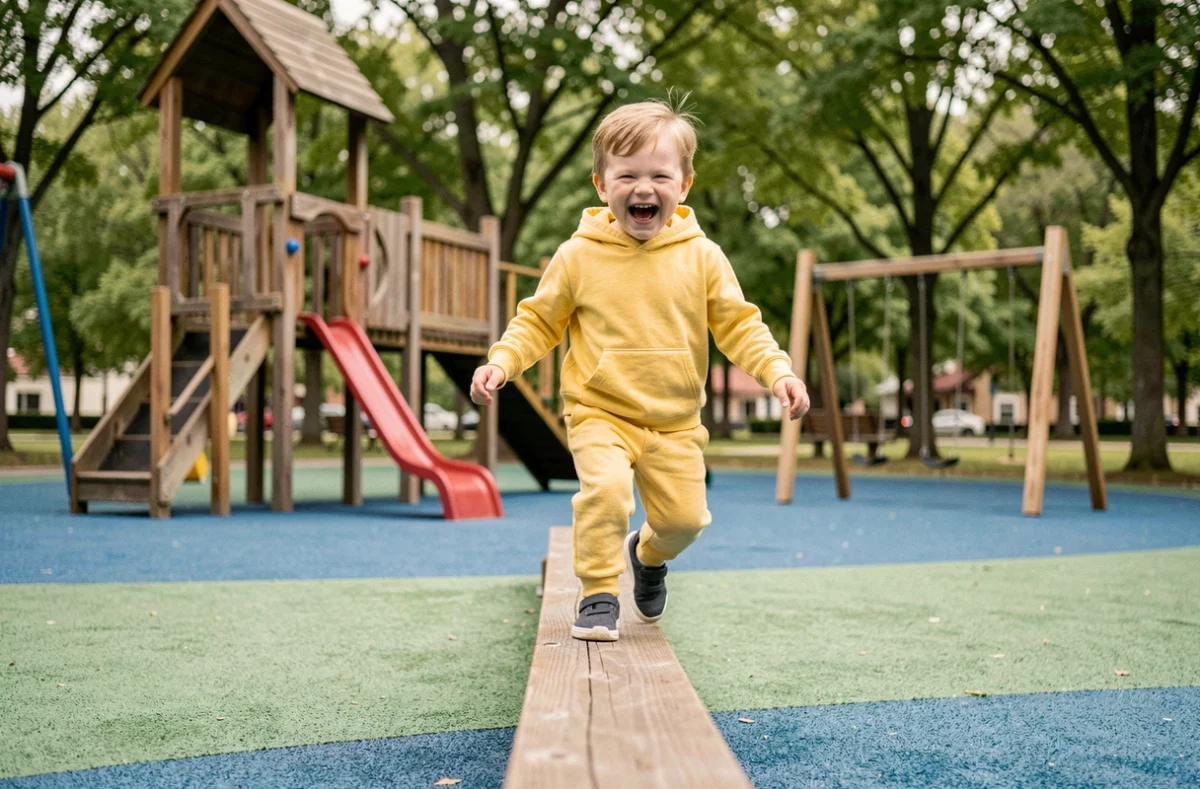
The primary cause of injury in children under four in a sports context is falling on an unsuitable surface. A shock-absorbing floor (foam, tatami, or synthetic grass) is non-negotiable for any activity involving jumps or running.
Supervision must respect a child/educator ratio consistent with the group’s level of autonomy. Below the age of three, we observe that one adult for four children is a functional minimum. Beyond that, monitoring trajectories and correcting posture become impossible.
Duration and Frequency of Sessions for Toddlers
A two-year-old’s attention span is around a few minutes on the same task. An effective baby sport session rarely lasts more than thirty to forty-five minutes, including breaks. Multiplying short workshops (three to five minutes each) with rotation keeps engagement without exhausting the nervous system.
- Alternate locomotion workshops (crawling, walking on a low beam) and manipulation workshops (throwing light balls, stacking) to engage different muscle groups.
- Plan a calm-down period at the end of the session: guided breathing, gentle stretching in the form of animal imitation games.
- Eliminate any competitive elements: no rankings, no visible stopwatch, no progressive elimination.
Playful Approach and Motor Development in Preschool
Supervised free play remains the most effective educational lever to anchor motor patterns in toddlers. Modular motor skills courses, low-intensity chase games, and balance workshops on unstable supports reproduce the necessary stimuli without sporting formalism.
In baby gym, progression occurs through voluntary repetition. A child who chooses to do a forward roll ten times demonstrates active motor learning. Forcing them to move to the next workshop interrupts this process.
Balance and Coordination Games: Concrete Examples
The low obstacle course (cushions, hoops on the ground, overturned benches) simultaneously develops dynamic balance and motor planning. We recommend changing the configuration every two to three sessions to maintain cognitive load without creating frustration.
Throwing-catching games with oversized balls (like weighted balloons) improve hand-eye coordination while limiting the risk of injury. The diameter of the ball must exceed the width of the child’s two hands to encourage a natural two-handed grip.
Financial Assistance and Sports Registration Before Age Six
Families often rely on the Pass’Sport to reduce registration costs. In 2026, this program will apply to young people from the age of six, effectively excluding toddlers. Children with disabilities and certain beneficiaries of the CAF can access it, but always from the age of six.
For those under six, funding relies on municipal assistance (sports vouchers, grants to local associations) or programs specific to the family allowance funds of each department. These aids vary greatly from one community to another and change at each school year. Contacting the town hall or the CAF directly remains the most reliable approach.
- Check if the municipality offers a sports voucher or specific assistance for sports awakening activities.
- Consult the internal regulations of the targeted structure to anticipate any additional fees (uniform, insurance, license).
- Ask if a health questionnaire is sufficient or if a medical certificate is required by the club.
The cost of registration in baby sport or baby gym focuses on the annual fee and insurance. Equipment remains minimal at this age: flexible clothing, suitable shoes, or bare feet depending on the discipline.
The sports initiation of toddlers benefits from remaining simple in its means and ambitious in its motor objectives. An appropriate surface, sufficient supervision, short and varied sessions, and a complete absence of competition: these four parameters are enough to lay the foundations for a sustainable and safe physical practice well before entering elementary school.