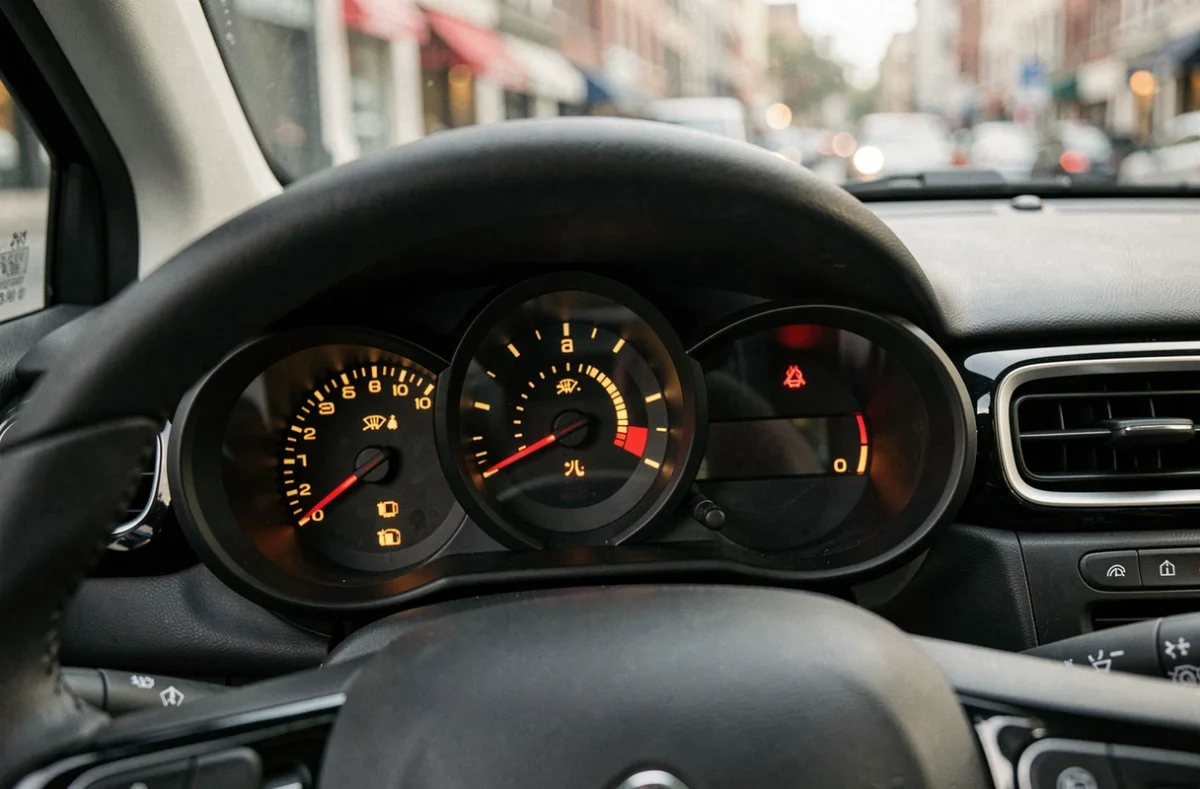
Each symbol displayed on a Citroën C3 instrument cluster conveys information through its color, shape and behavior (steady or flashing). Understanding this visual language helps you distinguish a simple service reminder from a warning that requires you to stop the engine. The following sections explain how the system works at each severity level and what to do in each situation.
How the color code works and the difference between steady and flashing warning lights
The C3 dashboard uses a three-level system. A red warning light signals an immediate danger to your safety or the integrity of the engine. An orange warning light indicates a fault that needs to be checked within the next few days. Green, blue or white lights are informational: they confirm that a feature is active (low-beam headlights, cruise control, turn signals).
When you start the car, most symbols briefly illuminate while the instrument cluster runs its self-test. This is normal as long as they go out once the engine is running. A warning light that stays on while driving, or comes back on intermittently, should be checked.
One detail that is often overlooked: for the same symbol, a flashing warning light is more serious than a steady one. The engine warning light (check engine) is the clearest example. If it stays on steadily, it suggests an emissions fault or a faulty sensor. If it flashes, it may indicate misfires that could damage the catalytic converter. This distinction completely changes what you should do.
For more information on the meaning of each specific symbol, a detailed guide lists Citroën C3 dashboard warning lights and the appropriate action for each one.

Red warning lights on a Citroën C3: stop the engine and carry out priority checks
A red warning light leaves no room for interpretation. The rule is simple: stop the vehicle as soon as possible, switch off the ignition and check the issue before setting off again.
Engine oil pressure
The oil-can symbol signals a drop in pressure in the lubrication system. Continuing to drive in this situation can cause engine failure within minutes. Once stopped, check the oil level with the dipstick while the engine is cold. If the level is correct but the warning light remains on after restarting, the problem is probably with the pressure sensor or oil pump, and the vehicle should not be driven without a diagnosis.
Coolant temperature
The red thermometer indicates overheating. The most common causes on a C3 are low coolant, a stuck thermostat or a faulty radiator fan. Switching off the air conditioning and engine promptly helps limit damage. Opening the expansion tank cap while the engine is hot is dangerous: wait for the engine to cool before handling it.
Brake system
This warning light can come on for two different reasons: the handbrake is still engaged, or the brake fluid level is too low. If the handbrake is released and the light stays on, check the brake fluid reservoir under the hood. An unusually low level suggests a leak in the system, which directly compromises braking performance.
Battery
The red battery symbol does not always mean the battery is dead. It indicates that the charging system is no longer working properly. The alternator may be at fault. The vehicle will continue to run on the battery’s remaining charge, but this will gradually run down, eventually shutting off the electronics and then the engine.
Orange warning lights on a Citroën C3: faults to address without panicking
An orange warning light generally means you can continue your journey, provided you arrange an inspection soon. How long you can wait depends on which warning light is on.
- A steady engine warning light (check engine) indicates a fault in the emissions control system or a sensor reading outside its normal range. It is best to have the fault codes read with a diagnostic tool (OBD2 scanner) to identify the exact problem before consulting a mechanic.
- The ABS warning light indicates that the anti-lock braking system is disabled. Conventional braking remains operational, but the vehicle loses emergency braking assistance. The difference is noticeable on wet roads or in a sharp turn.
- If the ESP or stability control warning light stays on when there is no loss of traction, it indicates a fault with the control unit or a wheel sensor. You can still drive, but the electronic safety net is no longer available.
- The tire pressure warning light (TPMS) comes on when a sensor detects a significant deviation. Check the pressure in all four tires when cold before assuming a sensor is faulty.
On BlueHDi diesel models, a specific orange warning light relates to the AdBlue level. When this light comes on, there are generally several hundred kilometers left before the engine cannot be restarted. Topping up within a reasonable time will help prevent you from being stranded.

Wrench warning light and servicing: what your C3 is really telling you
The orange wrench symbol is not a fault warning. It indicates that the service interval set by the manufacturer is approaching. The C3 calculates this interval based on mileage and the time elapsed since the last service.
After the work has been carried out at a garage, this warning light must be reset manually using the procedure described in the owner’s manual. If it is not reset, the light will stay on even after a full service, which can cause unnecessary confusion.
Manufacturer recalls and dashboard limitations
One thing the dashboard does not tell you: the absence of an illuminated warning light does not guarantee that there is no manufacturer recall. Some recall campaigns have affected C3 models equipped with the 1.2-litre PureTech petrol engine, particularly for issues related to the timing belt and vacuum pump. A vehicle’s recall status can only be checked using its VIN through the Citroën network or the official recall service—not by looking at the dashboard.
Similarly, recalls related to Takata airbags, which may affect some second-generation C3 models, do not trigger a specific warning light. The appropriate step is to check the VIN.
Instructions associated with warning lights may also vary between C3 generations. The owner’s manual for the vehicle’s model year and engine is the most reliable reference for interpreting a specific symbol. The same symbol may have a slightly different meaning on a 2010 C3 and a 2024 C3.