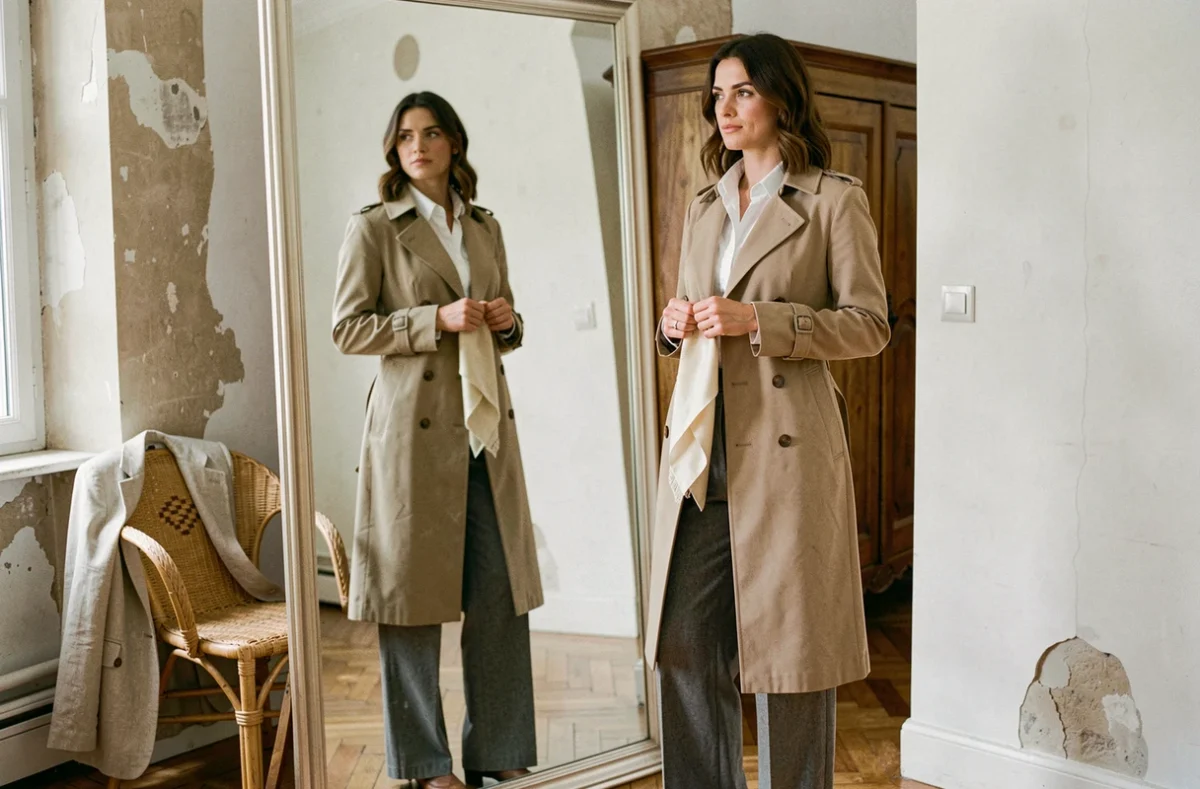
Style is not built by stacking trendy pieces. It relies on a wardrobe logic where each garment interacts with the others, where proportions matter as much as colors, and where coherence takes precedence over quantity.
Ratio of structured pieces to soft pieces in a daily outfit
An outfit perceived as “stylish” almost always respects a balance of textures. Pairing a structured garment (blazer, thick denim jacket, straight coat) with a soft piece (flowy dress, viscose pants, draped t-shirt) creates a visual contrast that adds depth effortlessly.
The common mistake is to combine only soft materials. An entirely fluid outfit flattens the silhouette, even on a slender body type. Conversely, a total rigid look (raw jeans, starched shirt, tailored jacket) stiffens the appearance.
One structured piece for one soft piece per outfit is enough to create a readable balance. This is the simplest principle to apply to enhance a daily look, and it is also the one we most often see neglected.
To delve deeper into this type of approach and find complementary ideas, Conseils Beauté’s fashion tips detail several concrete combinations suitable for different contexts.
Fashion wardrobe: sort by function, not by season
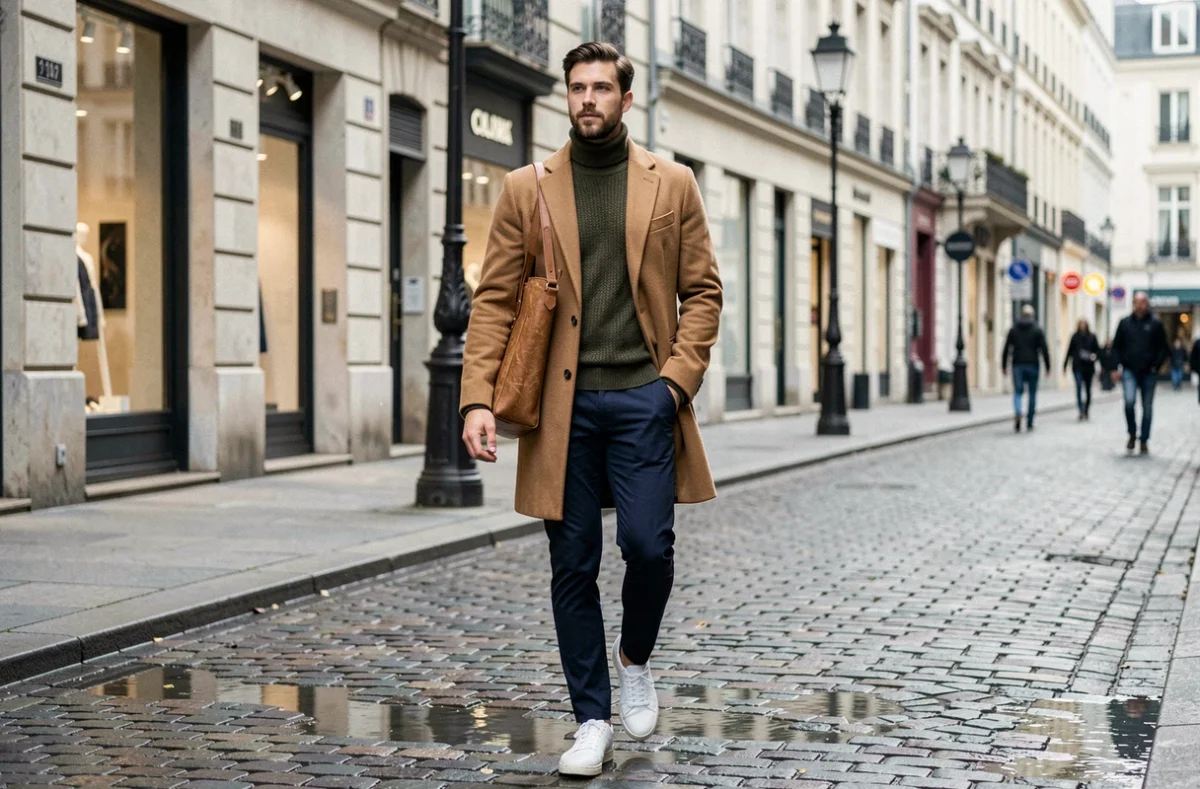
Sorting clothes by season is a common but ineffective reflex. A linen blazer worn in summer with shorts can also work in mid-season over a fine turtleneck. Sorting by function (structured top, neutral bottom, statement piece, mid-layer) allows you to multiply combinations without buying more.
Specifically, a functional wardrobe is based on four categories:
- Neutral basics (t-shirts, tank tops, straight pants) that serve as the foundation for any outfit and come in two or three colors maximum
- Structuring pieces (jackets, coats, vests) that provide the “frame” of the silhouette and define the style (casual, dressed up, hybrid)
- Statement pieces (a printed dress, a bold accessory, a bright color) that focus the identity of the look on a single element
- Mid-layers (open shirts, cardigans, fine sweaters) that ensure thermal transition and add visual depth
When each garment has a clear role, impulsive purchases decrease. You immediately identify real gaps instead of accumulating duplicates.
Second-hand and textile repair: renewing your style differently
The French second-hand clothing market grew in volume in 2025. Sales made directly by brands, through their shops or dedicated spaces, increased more than exchanges between individuals or social and solidarity economy circuits.
This gap between channels deserves attention. Brand second-hand spaces often offer more selective sorting and better guaranteed condition of items, but at a higher price than that of an associative thrift store. Therefore, the choice of channel depends on the budget and the level of demand regarding the condition of the garment.
On the maintenance side, Refashion’s Repair Bonus is a concrete and underutilized lever. This scheme allows you to receive a discount directly deducted from the bill at a certified repairer. Mending a hem, replacing a zipper, or adjusting a fit extends the lifespan of a piece and, above all, a tailored garment fits better than a poorly adjusted new piece.
Colors and fashion accessories: two high-impact levers
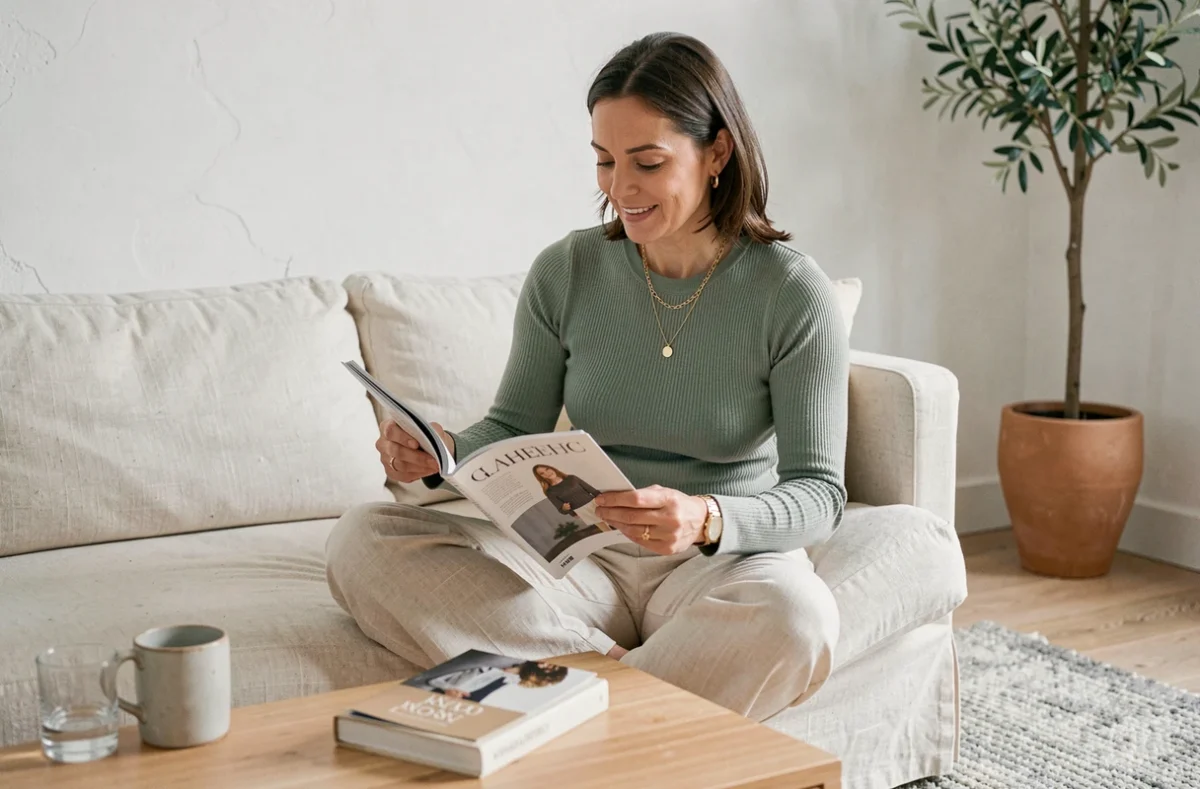
Accessories and colors are the two variables that can be changed most quickly to alter the perception of an outfit. Color affects the overall look, while the accessory draws attention to a specific point.
Building a personal palette of three colors
Adopting a limited palette (one dominant neutral, one secondary neutral, one accent color) radically simplifies daily clothing choices. The dominant neutral covers the lower body and base layers. The secondary neutral applies to structuring pieces. The accent color focuses on a single element per outfit: a scarf, a bag, a pair of shoes.
Three coherent colors are better than ten scattered shades. This constraint liberates creativity instead of stifling it, as it forces you to play with materials and proportions rather than accumulating colors.
Accessories: choose a unique focal point
A bold necklace with statement earrings and a wide-buckle belt creates visual noise. The eye doesn’t know where to settle. The rule of a unique focal point works better: one accessory draws attention, while the others remain discreet or absent.
The most versatile pieces in this role remain medium-sized structured bags, watches with readable dials, and silk or modal scarves tied simply. These are elements that add personality without overwhelming the outfit.
Fashion trends: what deserves to be integrated and what does not
Not all trends are equal in terms of stylistic durability. Distinguishing a foundational trend from a viral micro-phenomenon prevents purchases that will end up at the back of the closet in a few months.
Trends that relate to cuts (the return of wide pants, pronounced shoulders, high waist) integrate easily because they modify the silhouette without requiring a complete renewal. Cut trends last several seasons and adapt to an existing wardrobe.
Trends based on a highly identifiable pattern or signature piece (a viral print, an extreme cut) fade more quickly. They work well as accessories or isolated statement pieces, but not as the foundation of a wardrobe.
European regulations are also pushing fashion towards more circular models, even if the concrete effects for consumers remain gradual. Keeping this trajectory in mind encourages prioritizing durable pieces over disposable purchases dictated by an algorithm.
Enhancing your style daily does not require a substantial budget or constant renewal. An organized wardrobe by function, a mastered color palette, a balance of soft and structured textures, and the reflex to repair rather than replace cover most of the work. The rest is just pleasure.