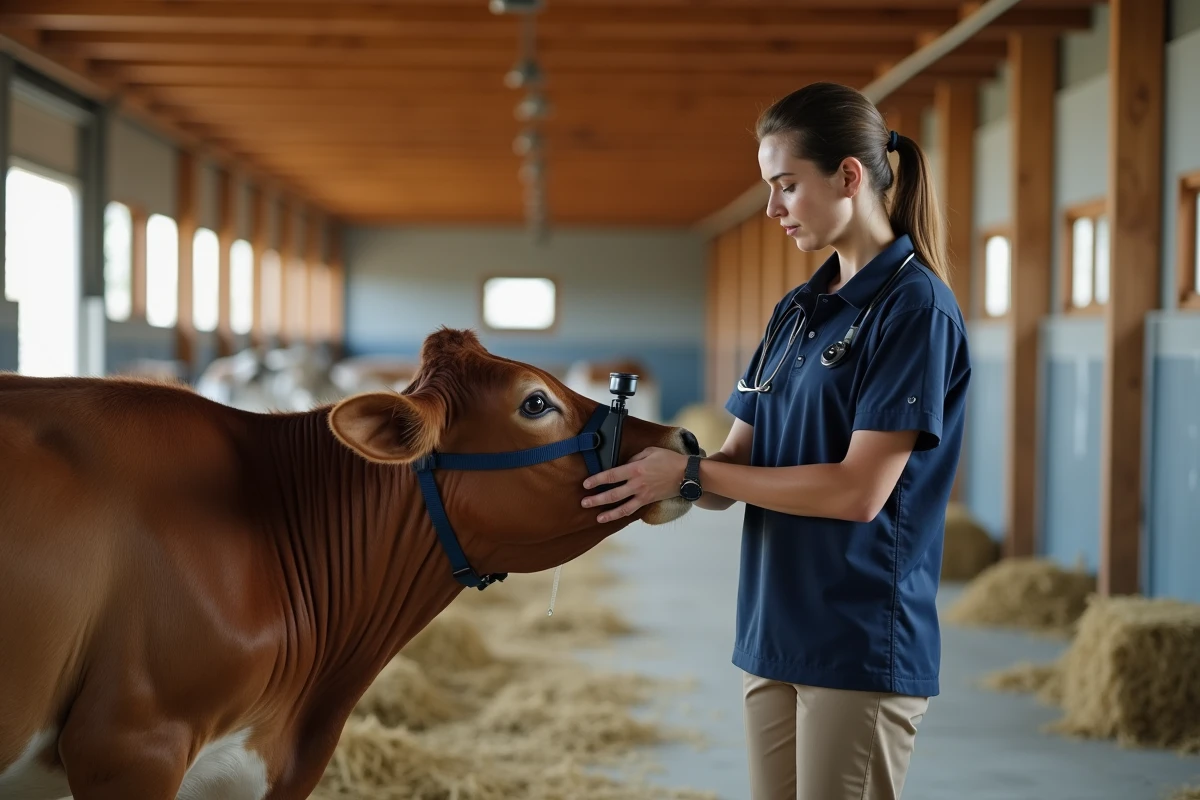
In some farms, the health status of animals is now assessed in real-time by algorithms capable of detecting signs of stress even before they become visible to humans. Veterinarians are no longer the only ones making early diagnoses: connected devices continuously collect and interpret physiological data.
Mobile applications already offer personalized advice for the diet and physical activity of pets based on behavioral profiles generated by machine learning. This evolution in practices is changing the relationship between humans and animals while redefining standards of animal welfare.
Why artificial intelligence is changing our understanding of animal welfare
Animal welfare is now free from superficial judgments or limited indicators. In agriculture as well as in research, artificial intelligence is shaking up established benchmarks. Sensors are being used on cows, pigs, dairy goats, and sheep, recording every movement, every physiological variation, every change in environment. All this data, including temperature, heart rate, and group dynamics, continuously feeds into models of machine learning and deep learning.
The WAIT4 project perfectly illustrates this turning point. INRAE, CEA, and INSA are involved: the idea is to individually monitor the welfare of farm animals, minute by minute. GPS, microphones, accelerometers, cameras: each technology enriches the overall perspective. Meanwhile, the WELL-E Chair takes the experience even further. Its living digital laboratory, first in Quebec and Ontario and then on a Canadian scale, relies on a network of partner farms to refine protocols and support the longevity of dairy cattle.
The impact is not just a matter of technology. The entire perception of animal health and the relationship with animals is evolving. Algorithms reveal the richness of reactions to stress, illness, or climate change. Farmers, supported by these tools, adjust their daily routines, react earlier, and provide more accurate care. To delve deeper into this shift, the platform xanima.euX Anima – The blog for animals offers sharp insights into advances in artificial intelligence serving animal life and the connected management of farms.
Can we really communicate with animals thanks to new technologies?
Understanding animals through technology is no longer utopian. Researchers from the Interdisciplinary Research Center and the breakthrough of artificial intelligence are reshaping our relationship with human-animal communication. Now, deciphering vocal signals, postures, or micro-expressions of the dog, cat, or horse relies on the analysis of vast behavioral data.
Deep learning algorithms, CNN, RNN, Transformers, process images, sound recordings, and physiological parameters from multiple sensors. In the face of complex interactions, they identify patterns, sequences, and unprecedented correlations. Classical ethology is enriched with new avenues: AI offers original interpretations of animal signals. These advancements are already reflected in various applications:
- automated veterinary diagnostics through the analysis of vocalizations or unusual behaviors
- intelligent voice interfaces dedicated to dog training or emotional mediation
- permanent behavioral monitoring to prevent risks and improve welfare
The innovation of animal monitoring by drone, led by Ben Koger at the Max Planck Institute for Animal Behavior, is a striking illustration: drones capture data without contact, causing no stress to the animal; AI models then analyze trajectories, social relationships, and environmental signals.
Transforming the emotions or needs of the animal into human language remains, for now, a step to be taken. The risk of algorithmic anthropomorphism, projecting our intentions onto the animal, calls for caution. However, the convergence between neuroscience, language sciences, and artificial intelligence opens a new field for experimentation, balancing technical rigor with attention to animal sensitivity.
Monitoring, health, and peace of mind: the concrete benefits of AI for owners and farmers
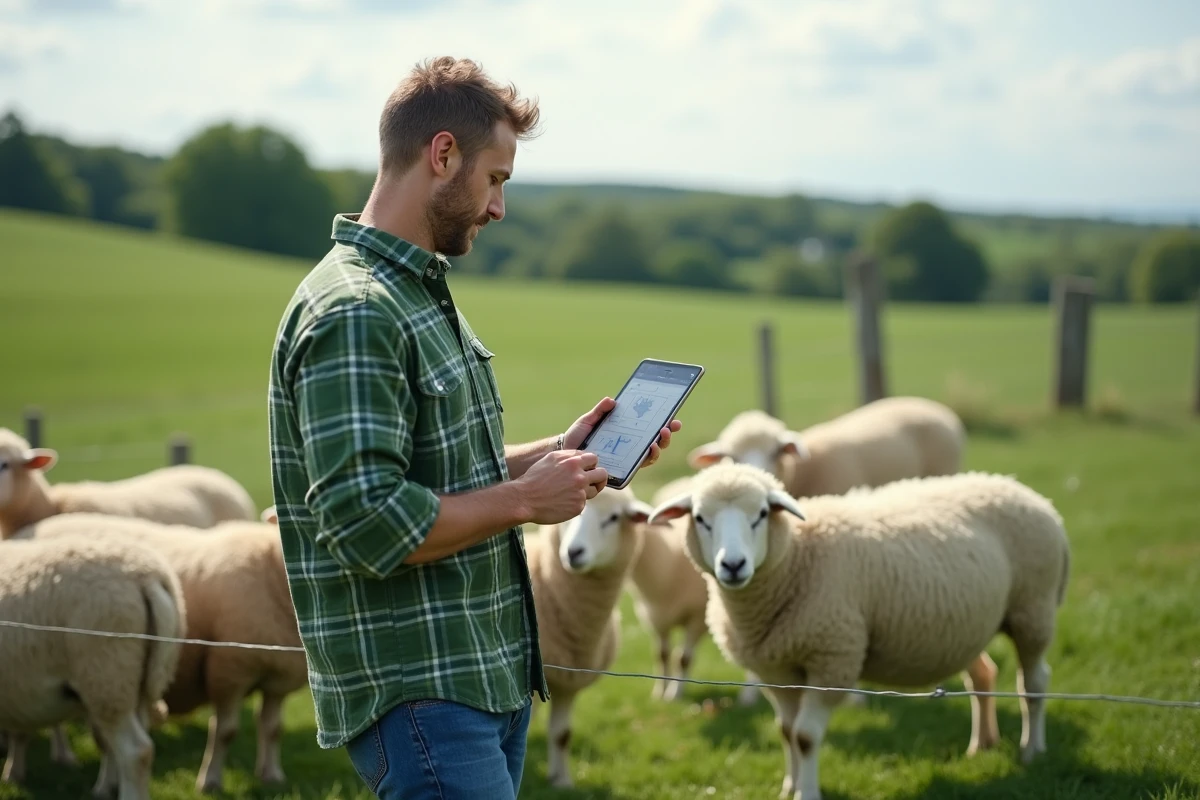
The management of animal welfare is reaching a decisive stage. Artificial intelligence enables individualized, real-time monitoring of the behavior, health, and environment of farm animals. Thanks to the constant influx of big data from sensors, accelerometers, cameras, or through audio, even the slightest variation or sign of illness or stress can be detected at the earliest stage.
The WAIT4 project, involving INRAE, INRIA, CEA, and INSA, deploys these tools in farms with cows, pigs, dairy goats, and sheep. Algorithms analyze postures, movements, and feeding behavior: a lameness, acidosis, or early signs of dehydration are detected before the situation worsens. Owners then benefit from a real lever for action: intervening before health or productivity is threatened.
The WELL-E Chair goes even further with its network of connected farms and its living digital laboratory, initially established in Quebec and Ontario, then expanded across Canada. This vision of predictive veterinary medicine transforms the bond with animals: monitoring is discreet, rooted in respect and shared responsibility.
However, a major issue remains: protecting data privacy and preventing any misuse. Improving animal welfare must not open the door to uncontrolled uses. Questions of responsibility and the reliability of automated analyses call for vigilance, especially when AI is involved in care or daily management.
Looking ahead, the entire human-animal relationship is being reinvented, caught between technical prowess and new ethical challenges. AI does not replace human vigilance, but it imposes a new, clear-eyed perspective on what it truly means to care for animals in the digital age.