
When a poultry farmer in short supply chains receives a formal notice for non-compliance of their facilities, the question of animal rights in France takes on a very concrete turn. Far from activist platforms, it is often recent regulatory constraints that reshape the daily lives of farms, shelters, and animal protection associations.
Regulatory Constraints and Family Farming in Short Supply Chains
Filmed investigations in industrial farms attract media attention. However, the new animal welfare standards also affect small family farms, those that sell directly at markets or through AMAP.
Decree No. 2026-245 of March 12, 2026, published in the Official Journal, strengthens the obligations regarding housing and health monitoring for all farms, regardless of size. For a farm with a few dozen animals, the costs of compliance weigh proportionally heavier than for an industrial structure that pools its investments.
One can follow the evolution of these issues on the Animal Liberation website, which documents both activist actions and the legislative repercussions on the ground. Farmers in short supply chains find themselves in a paradoxical position: often praised for their practices, they face the same administrative requirements as intensive sectors, without having the same financial margins.
Several points of friction arise on the ground:
- The requirement to arrange living spaces (minimum area per animal, outdoor access) imposes works that are sometimes incompatible with the old buildings of family farms.
- Enhanced veterinary monitoring, with documented visits and digital records, generates an administrative burden that small farmers bear alone.
- Compliance checks, now more frequent, do not always take into account the economic context of the farm.
Feedback varies on this point: some farmers believe that these standards genuinely improve the welfare of their animals, while others feel that they accelerate the disappearance of small farms in favor of larger structures.
Actions of Animal Protection Associations in France: What Changes in 2026
The year 2026 marks an operational turning point for several associations. L214 has multiplied targeted complaints, particularly against a pig farm in Morbihan accused of castrating piglets without anesthesia. The investigation opened following this complaint illustrates a change in method: associations now favor the judicial route rather than just media coverage.
On the SPA side, the 2026 semi-annual report highlights the growing pressure on shelters. The capacity to accommodate stagnates while abandonments do not decline. The 30 Million Friends Foundation has, for its part, referred the matter to the Council of State to enforce the ban on selling dogs and cats in pet shops, a measure that has been voted on but whose application remains uneven across departments.
Emergency Agricultural Bill and Possible Setbacks
The emergency agricultural bill examined in May 2026 worries several organizations. L214 denounces an offensive against animal defense associations, with provisions that could restrict access to farms for whistleblowers. The text also provides for relaxations of standards for certain types of farming, which directly contradicts recent advancements.
At the European level, the issue of mirror measures is progressing. L214 has called on MEPs in Strasbourg to ensure that imported products meet the same animal welfare standards imposed on French farmers. Without European harmonization, national constraints mainly penalize local producers.
Animal Abuse and Justice: Cases That Shift the Lines
The judicialization of the animal cause is accelerating. Courts are handling more cases related to abuse in farms, as well as among individuals. Le Figaro noted in March 2026 that the majority of animal protection associations found themselves in a critical financial situation, which undermines their ability to bring these cases to court.
The Brigitte Bardot Foundation emphasizes that the funding of legal actions absorbs an increasing share of association budgets. Each procedure mobilizes considerable human and financial resources, and processing times remain long.
The Council of Europe Pushes for a Common Framework
The Council of Europe’s report on animal rights, published in February 2026, recommends that member states harmonize their legislation. For France, this potentially means new obligations in the coming years, both for farms and for the keeping of pets.

Shelters and Abandonments: Pressure That Does Not Weaken
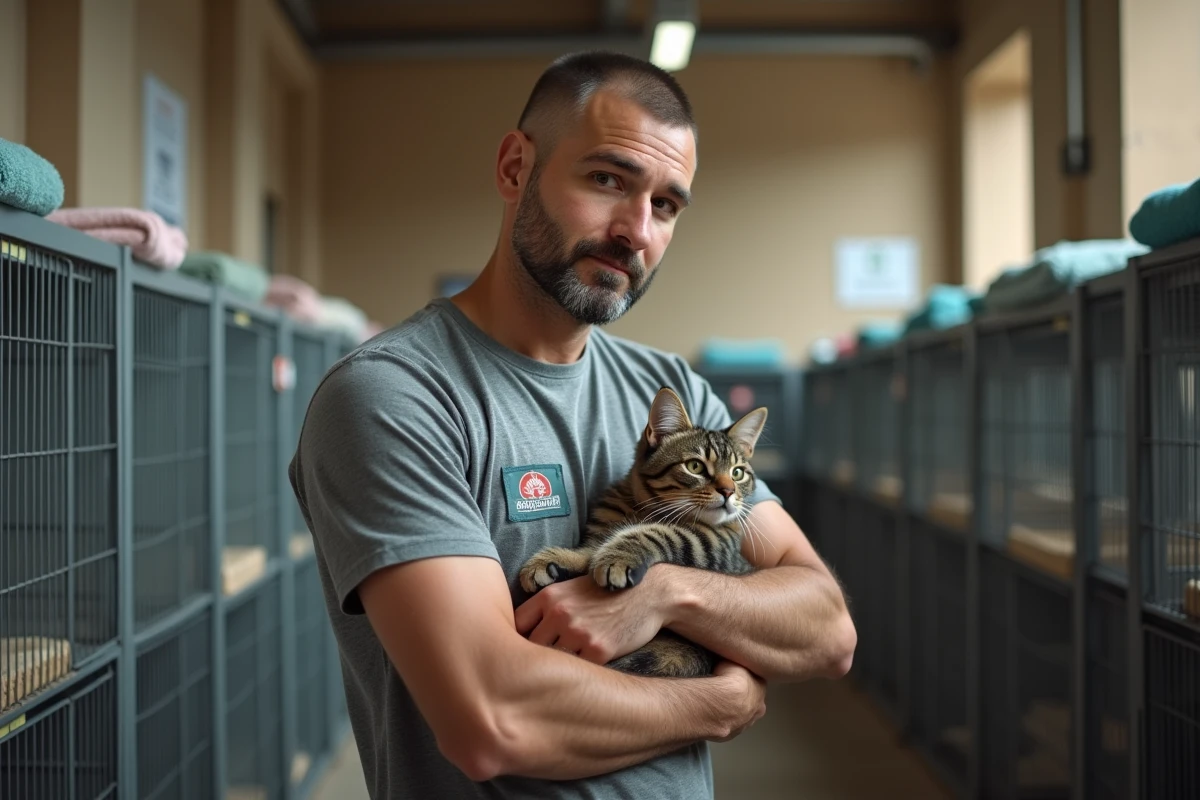
On the ground, shelters are absorbing the consequences of all these developments. The SPA celebrates its 180th anniversary, but the daily reality of reception structures remains tense. Volunteers manage flows of animals that budgets can no longer support.
Concrete actions that make a difference at the local level often remain invisible:
- Sterilization campaigns in rural municipalities, led by local associations with limited resources.
- Targeted adoption programs for older or disabled animals, which struggle to find families.
- Training for municipal agents in detecting abuse situations, which is still very uneven from one community to another.
The defense of animal rights in France is not limited to shocking videos or online petitions. Recent legislative advancements open up prospects, but they also create tensions that neither activists nor farmers can ignore.