
A poorly treated roof in terms of thermal performance remains the primary source of heat loss in a residential building. Before choosing an insulation material or installation technique, the priority lies upstream: diagnosing the state of ventilation, the air permeability of the attic, and the hygroscopic compatibility between existing materials and those intended for addition.
Air permeability and ventilation: the prerequisites that estimates ignore
Enhancing the insulation of a roof without checking the attic ventilation leads to damage. Since 2023, feedback from engineering firms and artisan networks has reported a rise in condensation and mold after energy renovations, particularly when insulation is reinforced without adjusting the mechanical ventilation system (VMC).
The mechanism is simple: a tighter attic retains more indoor water vapor. If the air renewal is not recalculated, moisture migrates into the insulation, degrades its thermal conductivity, and attacks the framework. We systematically recommend an air tightness test (blower door) before any insulation enhancement, even partial.
On a typical construction site, this involves checking three points: the extraction rate of the VMC, the condition of the air inlets beneath the roof covering, and the continuity of the existing vapor barrier. If any of these three elements has a defect, installing high-performance insulation on top amounts to masking a structural problem.
To understand the steps for properly insulating your roof in their entirety, this upstream diagnosis is crucial for the success of the entire project.
Choosing roof insulation: lambda, phase shift, and hygroscopic compatibility
The lambda (thermal conductivity) alone is not sufficient to qualify a roof insulation material. Two complementary parameters determine the actual behavior of the material under summer conditions and in the presence of moisture: thermal phase shift and vapor permeability.

An insulation material with a low phase shift (standard glass wool, for example) allows the summer heat wave to pass through in a few hours. Under a slate or zinc roof facing south, summer comfort can deteriorate quickly despite a high thermal resistance R. Wood fiber or cellulose wadding offers a significantly higher phase shift, delaying the temperature rise in the attic.
Hygroscopic compatibility concerns the interaction between the vapor barrier, the insulation, and the under-roof screen. A breathable insulation installed behind a completely airtight vapor barrier creates a moisture trap. Conversely, a hygrovariable vapor retarder (of the variable Sd type) regulates the flows according to the relative humidity level, which is well-suited for bio-based insulations.
- Glass wool or rock wool: high-performance lambda, low phase shift, requires a well-sealed classic vapor barrier
- Wood fiber in rigid panels: good phase shift, breathable, compatible with a hygrovariable vapor retarder
- Blown cellulose wadding: excellent filling of irregular cavities, correct phase shift, sensitive to settling if the blowing density is insufficient
- Polyurethane in panels (sarking): very low lambda, reduced thickness, but impermeable to vapor, requiring specific management of air tightness on the interior side
External insulation with sarking: underestimated technical constraints
Sarking is not suitable for all frameworks. This technique, which involves placing rigid insulation panels above the rafters, alters the permanent load on the supporting structure. For an old framework (light trusses or modest-sized wood), a structural engineering firm must validate the feasibility before any estimate.
Raising the roof plane also introduces regulatory constraints. In areas covered by a strict Local Urban Plan, modifying the ridge height, even by a few centimeters, may require a prior declaration of works.
We observe that some artisans offer sarking without checking either the load-bearing capacity of the framework or the urban planning regulations. This shortcut exposes the project owner to a compliance refusal or, worse, localized roof sagging under snow load. Requiring a structural calculation note before signing the estimate protects against these two risks.
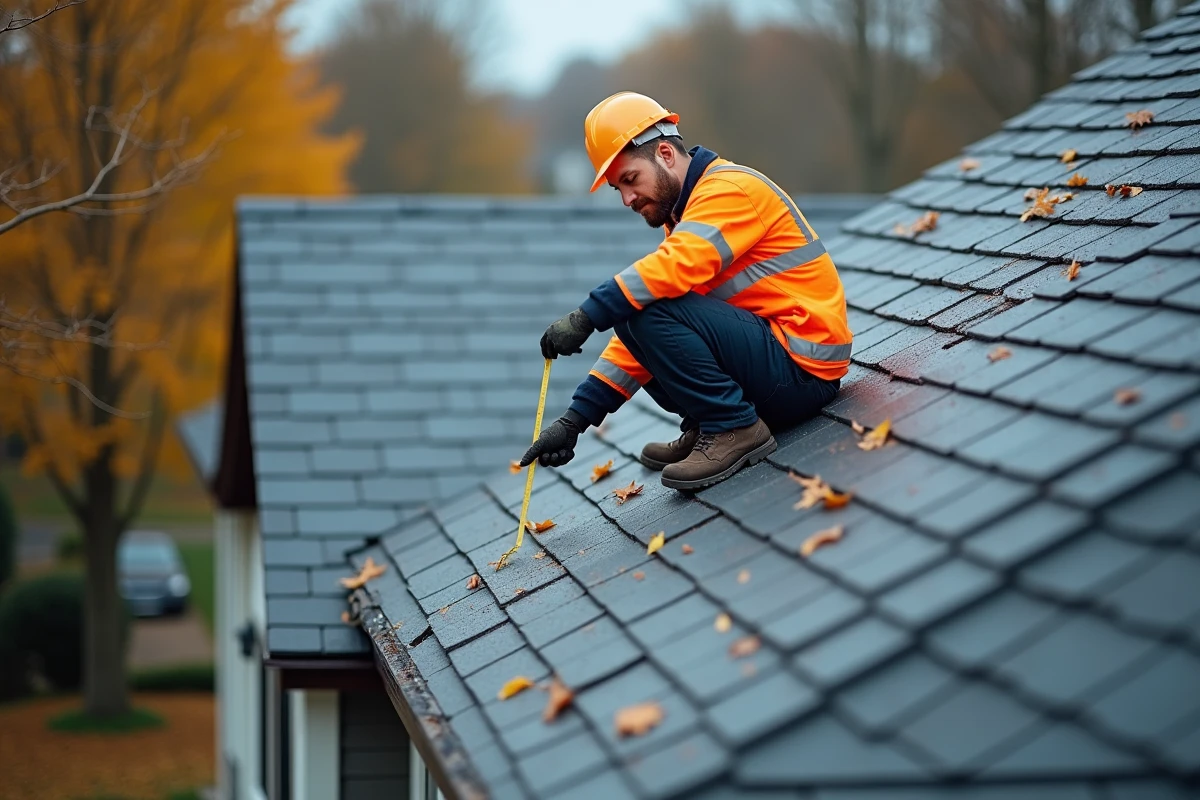
RGE certifications and work control: what the DGCCRF revealed
Inspections conducted by the DGCCRF in 2022-2023 highlighted an increase in disputes and misleading commercial practices surrounding roof insulation work, particularly offers of “zero out-of-pocket expenses.” The checks focused on the compliance of RGE certifications and the reality of the declared work to obtain public aid.
In practical terms, a valid RGE label does not guarantee the quality of implementation. It certifies an administrative qualification of the company, not a systematic control of each site. We recommend requesting at least three recent verifiable references, checking the validity date of the certification on the official site, and planning a contradictory reception visit with measurement of the actual thickness installed.
Actual performance after work: the gap between theoretical and observed gains
Follow-up studies conducted since 2022 confirm that actual energy savings after roof insulation often remain lower than theoretical gains. The main cause identified is the rebound effect: once comfort is improved, occupants raise the set temperature or heat previously closed rooms.
The revised European directive EPBD in 2024 aims to tighten requirements for the roofs of existing buildings. Member States will need to gradually impose minimum levels of energy performance, making poorly insulated roofs increasingly penalizing during resale or comprehensive renovation.
Anticipating this constraint by sizing the insulation beyond the current regulatory minimum remains the best strategy to protect the property’s value. Installing a thermal resistance R above the threshold required by RE 2020 costs marginally more at installation but avoids a second project in less than ten years.