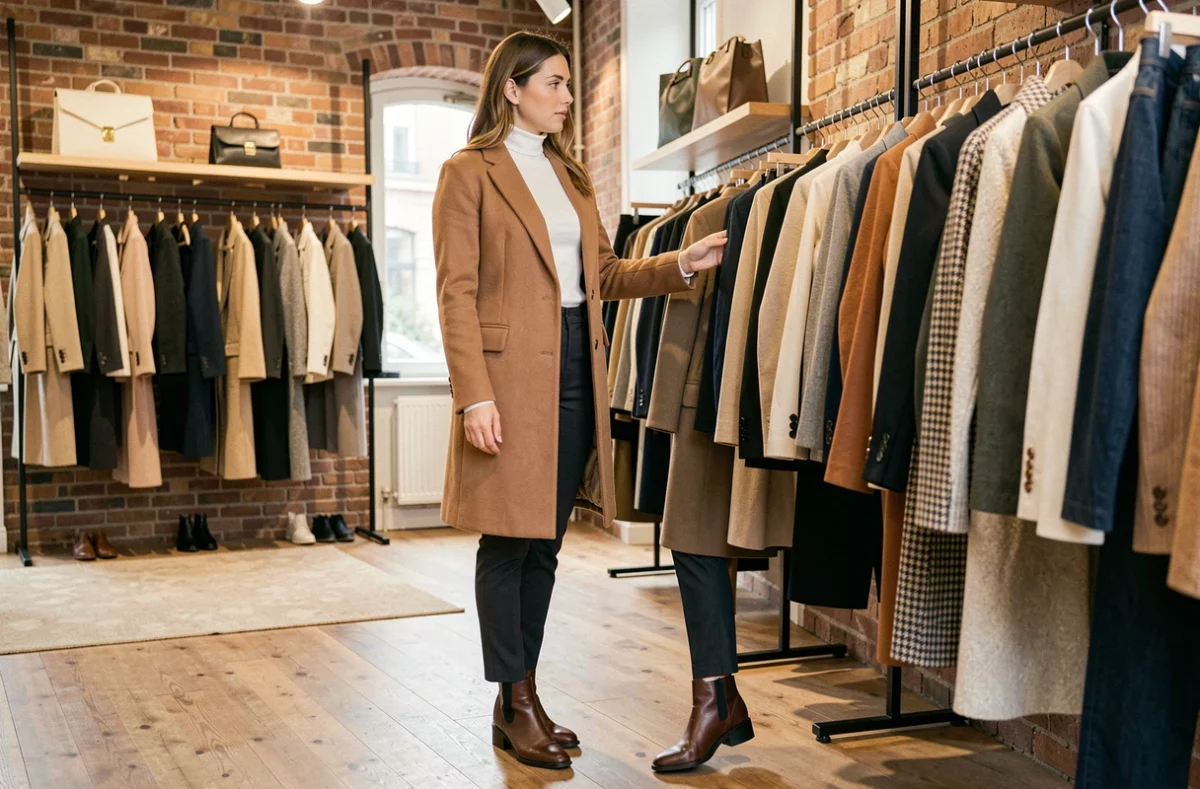
A blazer bought in March that ends up at the back of the closet in October, a pair of ankle boots worn three times before being replaced: we all know this scenario. Staying stylish all year round is not about accumulating seasonal pieces; it’s about building a wardrobe where each garment lasts several months without losing its relevance.
Sustainable and repairable materials: the real filter for choosing clothes
When hesitating between two shirts in a store, the first reflex is often to compare cuts or colors. One often forgets a criterion that has become crucial: the ease of repairing the garment.
Since the implementation of the modulated environmental contribution, items whose repair costs are too high compared to the new price are less favorably positioned in the market. A wool pair of pants that can have a hem redone or a button replaced holds more long-term value than a model made of glued synthetic material.
This logic is reflected in the choice of materials. A pair of dense cotton jeans, a linen dress, or a merino wool sweater can be mended, altered, or transformed. Natural materials age better and withstand more washes without losing their shape. To delve deeper into these topics and discover fashion articles on Verita Press, each season brings its share of useful insights on fibers and cuts that stand the test of time.
The new environmental labeling, gradually rolled out since October 2025, helps clarify things. It provides information on the place of manufacture and the product’s impact. Reading the label before buying has become a gesture of style as much as of ecology.

Capsule wardrobe: pieces that work from January to December
The idea is not to limit oneself to ten identical garments but to identify pieces that can be combined regardless of the season. We talk about clothing whose cut and color allow for natural layering.
The foundations of a versatile wardrobe
- A fluid pair of pants in medium-weight fabric (like blended wool): worn with sneakers in spring, ankle boots in autumn, it carries through the year effortlessly
- A thick cotton or poplin shirt: worn alone in summer, under a sweater in winter, it replaces three seasonal tops
- An unlined, slightly oversized blazer: it works over a t-shirt in May as well as over a turtleneck in November
- A straight dress in a structured material: with flat sandals in July, tights and boots in December
The test to apply: if a piece can only be worn with one type of outfit, it clutters more than it serves. You gain in style when each garment can fit into at least three different combinations.
Colors and combinations that last
Neutral shades (ecru, navy, heather gray, khaki) form the base. One or two bolder colors are added each season, but on accessories or easily interchangeable pieces: a scarf, a belt, a bag. The look remains coherent without giving the impression of wearing a uniform.
Opinions vary on this point, but combining more than three colors in one outfit often complicates the silhouette rather than enriching it. Two main shades and a touch of accent is a ratio that works in most situations.
Clothing care: actions that prolong style
Buying quality pieces is not enough if they are mistreated in the wash. A well-maintained garment retains its shape and color for several years. A few habits make a real difference in daily life.
Washing in cold water or at a maximum of 30 degrees preserves natural fibers. Wool, in particular, does not handle hot cycles and intensive spinning well. A raw denim pair gains character when washes are spaced out: it is aired out rather than thrown in the machine every week.
Proper storage also changes the game. Knit sweaters should be folded, not hung (hangers distort the shoulders). Shirts and blazers, on the other hand, need hangers suited to their size. A hanger that is too thin leaves marks on the fabric at the shoulders, while a hanger that is too wide stretches the silhouette.

Seasonal style without overconsumption: adapting your look with what you have
Changing styles between summer and winter does not require renewing half the wardrobe. Layering remains the most effective technique. A t-shirt worn alone in August becomes a base layer under a wool jacket as soon as temperatures drop.
Accessories are the most cost-effective lever to refresh an outfit. A silk scarf, a pair of earrings, a leather belt: these elements change the perception of a look without touching the main pieces. You can wear the same chic pants and the same shirt all week while varying only the accessories, and no one will notice.
The destruction of unsold items is now banned in France for new clothing. This constraint pushes brands to produce tighter collections and encourages consumers to buy less but better. It’s a fundamental change that aligns with the logic of sustainable style: fewer pieces, more combinations, more personality.
Building a solid wardrobe takes time. Each added piece should answer a simple question: what will I wear it with tomorrow, in three months, next year? If the answer remains unclear, it’s better to pass. Style that lasts all year is based on concrete choices, not impulsive purchases.