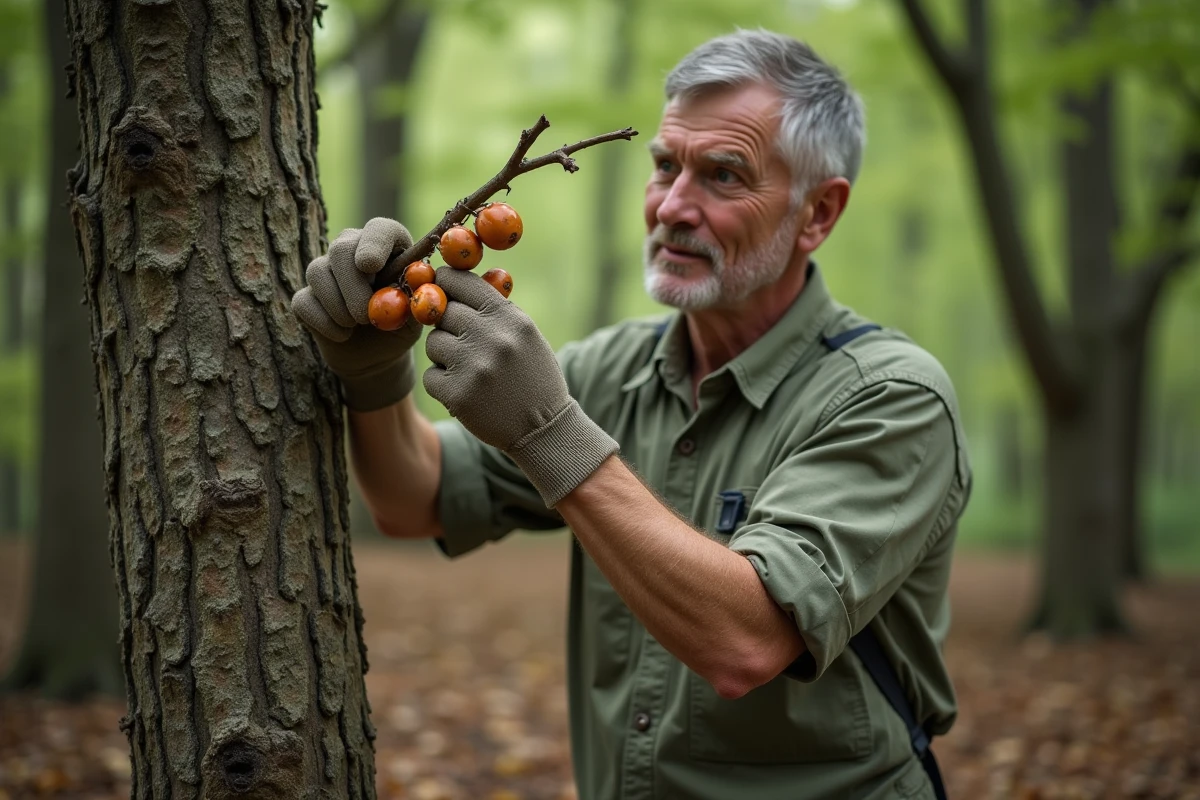
You collect oak leaves in the garden and come across a small hard ball attached to a branch. This growth is a gall. The natural reaction is to wonder if it can be touched, if it poses a danger to the skin or health. The oak gall on humans raises many questions, often mixed with a persistent confusion with scabies, a skin disease that has nothing to do with it.
Oak gall and parasitic wasp: what really happens under the bark
A gall is not a disease of the tree in the infectious sense. It is a growth reaction of the oak in response to the laying of an insect, most often a small wasp called a cynipid. The female lays her eggs in a bud or leaf. The plant tissue then develops abnormally around the larva, forming this characteristic ball.
The gall protects and nourishes the larva until it emerges. It contains tannins in high concentration, which give it its hardness and resistance. These tannins are plant compounds, not toxic substances for humans upon simple contact.
When you find information about oak gall on humans, the answer converges: touching an intact gall poses no health risk. The surface is woody, dry, and does not release any irritating substances through simple handling.
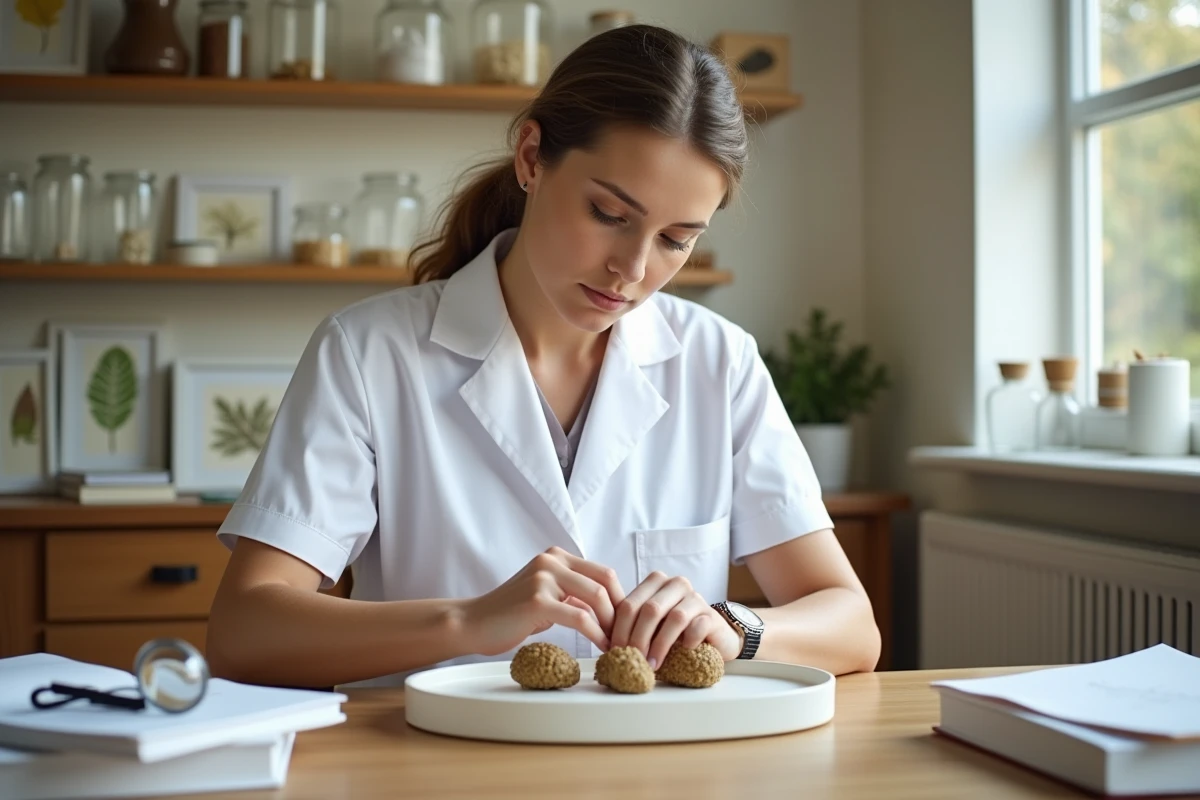
Gall or scabies: a confusion that delays medical consultations
The phonetic proximity between “gall” (plant growth) and “scabies” (human skin infection) creates a concrete problem. People who develop itching after a walk in the woods search for “oak gall danger” when they may be suffering from a common contact dermatitis, or conversely from an undiagnosed true human scabies.
Human scabies is caused by a parasitic mite, Sarcoptes scabiei. It is transmitted through prolonged skin-to-skin contact and requires a prescription parasitic treatment from a doctor. There is no biological link between this mite and the oak plant galls.
If you observe persistent itching, grooves on the skin, or lesions between the fingers after a nature outing, consult a healthcare professional. Delayed treatment of human scabies promotes its spread in the surrounding area.
Intact gall and powdered gall: two very different situations for health
You may have noticed that some sites sell oak gall powder as a “wellness” product or for intimate uses? This is where precautions become truly useful.
Garden handling: almost no risk
Picking up a gall that has fallen to the ground, cutting it open to observe the larva inside, showing it to curious children: none of these actions pose a problem. The dry gall is a piece of wood enriched with tannins. Washing your hands afterward is sufficient, just like after any gardening activity.
Grinding and inhalation: the real point of caution
The risk changes when transforming the gall. Grinding dry galls produces a fine powder, rich in concentrated tannins. Inhaling this plant dust can irritate the respiratory tract, especially in asthmatic or allergic individuals. The precautions to take in this specific case are the same as for any grinding of dry plant material:
- Wear a dust mask if you are reducing galls to powder for artisanal use (dyeing, ink)
- Work in a ventilated space, never in a closed room
- Avoid any contact of the powder with the eyes or mucous membranes
Intimate uses and self-medication: real caution
Some products made from oak gall are marketed for vaginal tightening or as a “natural remedy” for various intimate conditions. These preparations applied to mucous membranes can cause irritation. Concentrated tannins have a powerful astringent effect that, on sensitive tissues, risks causing dryness and micro-lesions.
No health authority recommends these uses. Santé Magazine has also warned that oak galls are not a miracle remedy for vaginal health.
Concrete precautions with children on a walk
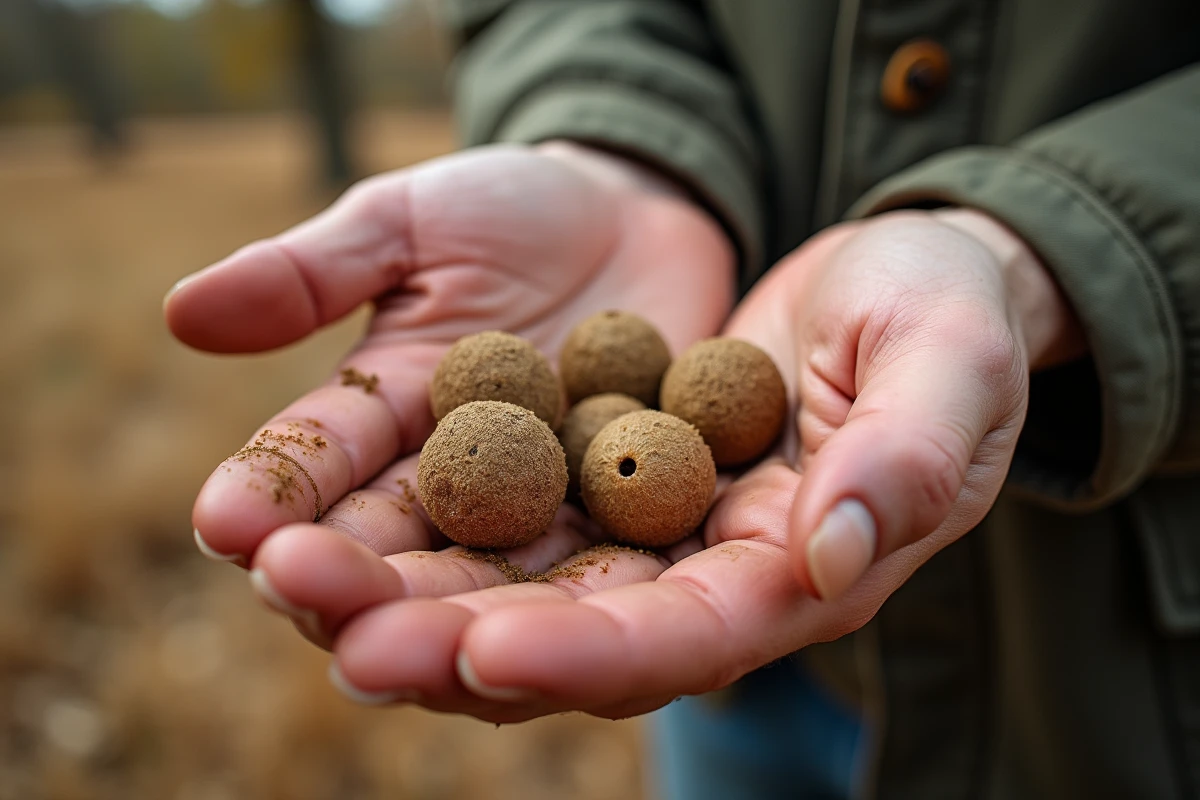
Galls fascinate children. Their round shape, color, and the surprise of discovering a larva inside make them an excellent educational tool during a walk. Here are some useful reflexes:
- Let children handle the intact gall without fear, then have them wash their hands
- Explain that the ball is not a fruit and is not edible (the tannins are very bitter, and the risk of accidental ingestion remains low)
- Avoid allowing a child to crush the gall near their face to prevent dust from getting into their eyes
- Take the opportunity to clearly distinguish “gall” from “scabies,” a vocabulary point that will prevent confusion later
The nature of the oak gall does not justify depriving children of a field discovery. The growth is biologically inert for human skin.
When to treat galls on a garden oak
An oak covered in galls is not a seriously ill tree. Galls do not kill the tree. On an adult and vigorous subject, the impact remains cosmetic. Cynipids have been part of the oak ecosystem for millennia.
On a young tree or one that is already weakened, a massive infestation can reduce growth vigor. In this case, removing the branches bearing galls before the emergence of adult insects limits recolonization the following year. No chemical treatment is specifically approved against oak cynipids for amateur use.
The oak gall remains above all a fascinating natural phenomenon, much more than a danger. The only real risk to humans does not come from contact with the gall itself, but from the misuse of its powder on mucous membranes or in self-medication.