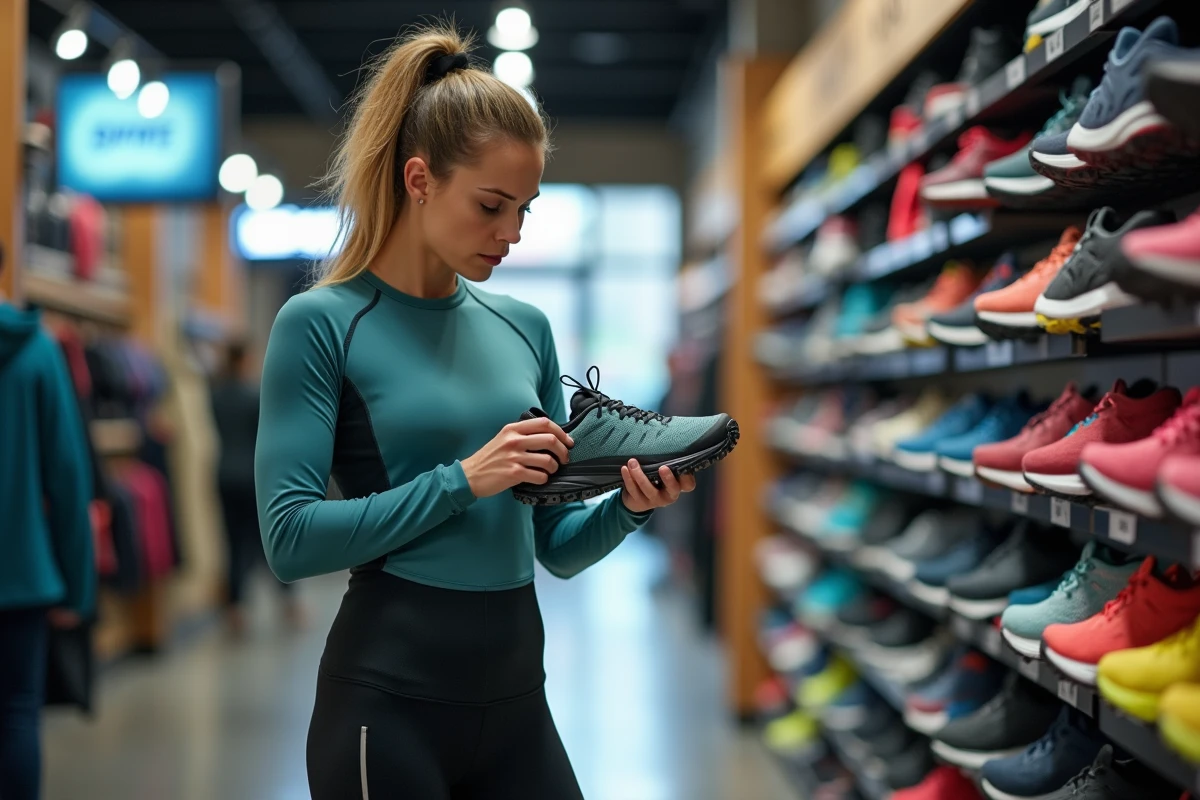
A pair of running shoes bought on a whim, a cotton short for interval training, a bike helmet found at a garage sale: these choices, often made out of habit or for savings, have direct consequences on comfort, safety, and progress. Choosing the right sports equipment is primarily about understanding what each piece of gear concretely brings to your practice.
Sports Shoes: The Criterion of Gait Before Brand
Have you ever felt knee or ankle pain after a few weeks of running? The shoe is often to blame, not because it is of poor quality, but because it does not match your gait type.
There are three gait profiles: pronating (the foot rolls inward), supinating (the foot rolls outward), and neutral. A shoe suited to your gait reduces the risk of injury much more effectively than a high-end model chosen at random. Some specialized stores offer gait analysis on a treadmill, usually free of charge.
Cushioning also matters, but differently depending on the runner’s weight and the training surface. On asphalt, generous cushioning protects the joints. On a track or grass, a lighter, more responsive model promotes speed. Before comparing brands, it’s better to browse the equipment offerings on Sportetica to identify models categorized by type of practice and body shape.
Technical Textiles and Compression: What Really Changes Recovery
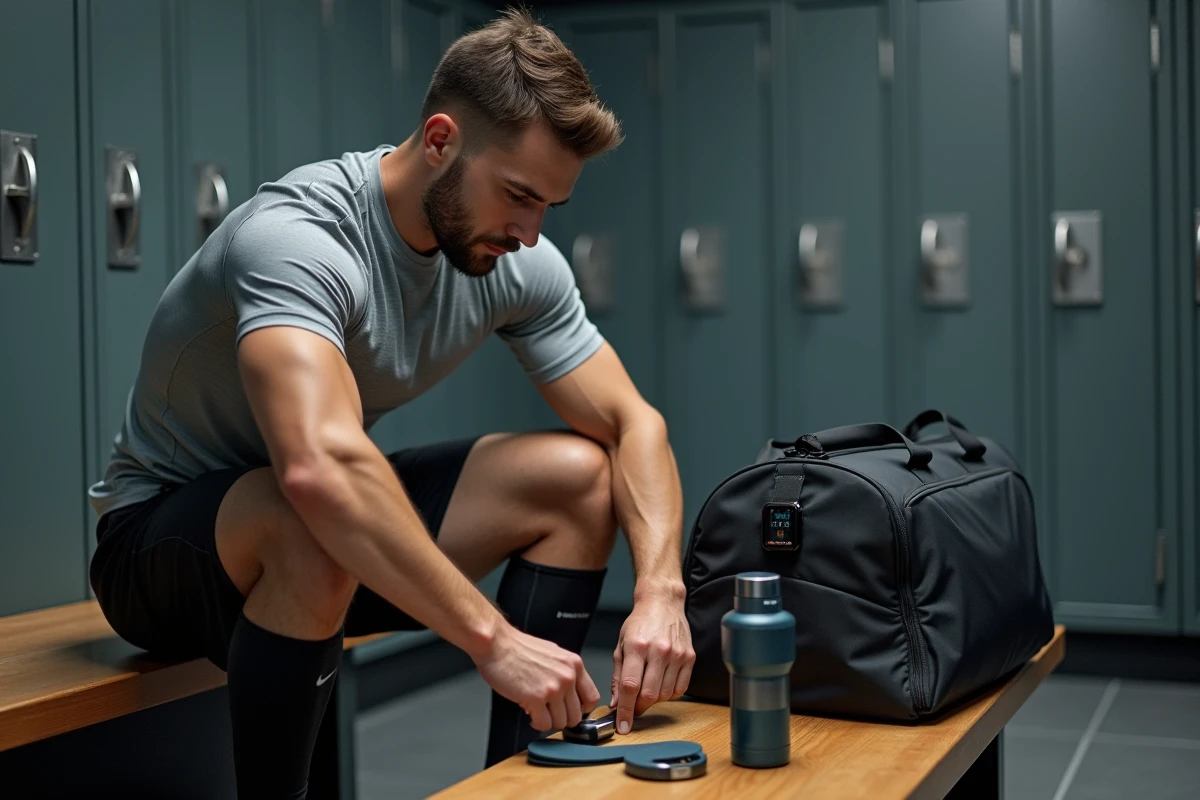
Competitors often talk about clothing comfort without going into detail about textiles. However, this topic deserves attention because recent data shows a measurable effect on performance.
Graduated compression garments, validated in laboratories, reduce markers of muscle damage and the sensation of fatigue after intense efforts. This benefit is observed in repeated short-term efforts: consecutive sprints, weightlifting sets, interval training. The study by Born and Holmberg published in Sports Medicine in 2023 confirms this effect.
In practice, this means that compression sleeves or technical leggings are not reserved for high-level athletes. If you have two sessions within 48 hours, this type of textile can make a difference in the quality of the second session.
Conversely, a simple cotton t-shirt absorbs sweat without wicking it away, which increases the feeling of heaviness and promotes irritation. A breathable synthetic textile keeps the body dry and better regulates temperature, even for a 30-minute outing.
Helmets and Protective Gear: Understanding Standards Before Buying
In cycling, the European standard EN 1078 has governed helmet manufacturing for years. What many practitioners do not know is that it has been supplemented by national recommendations incorporating protection against rotational impacts.
In 2022, Anses published an opinion recommending prioritizing helmets tested for oblique impacts, not just frontal ones. Technologies like the MIPS (Multi-directional Impact Protection System) address this requirement. A helmet certified against rotational impacts offers better protection against concussions than a model that only meets the basic standard.
How to check this in-store? Look for the MIPS mention or an equivalent certification on the helmet’s internal label. The price is often slightly higher, but the difference remains moderate compared to the additional level of protection.
This reasoning also applies to contact sports protections (knee pads, shin guards, chest protectors). Equipment that meets recent standards absorbs shocks better than an older model, even if visually identical.
Equipment Weight and Performance in Fitness or Running

The weight of the equipment influences performance in ways that are sometimes underestimated. In running, every extra gram on your feet costs energy over time. Manufacturers are working to lighten soles without sacrificing cushioning, which explains the price differences between ranges.
In fitness and weightlifting, the logic reverses. The weight of the accessory (dumbbell, kettlebell, weighted vest) should match your actual level, not your current ambition. Here are the criteria to check before investing:
- Weight-Level Correspondence: a weighted vest that is too heavy in the first few weeks causes postural compensations that increase the risk of lower back injury.
- Material Quality: dumbbells with a non-slip coating provide a stable grip even with sweaty hands, ensuring safety for overhead movements.
- Progressivity: prioritize adjustable equipment (adjustable weights, multi-level resistance bands) rather than a fixed one-time purchase.
You don’t need to buy everything at once. An adjustable bench, a pair of adjustable dumbbells, and a mat are enough to cover most home strength exercises.
Maintenance and Lifespan: A Performance Factor Often Ignored
High-performing equipment at purchase can lose its qualities in a few months if not properly maintained. Running shoes, for example, lose their cushioning capabilities after several hundred kilometers. Replacing your shoes before they are visibly worn out protects the joints.
For technical textiles, washing at too high a temperature destroys elastic fibers and water-repellent treatments. A cold cycle without fabric softener extends the garment’s lifespan and preserves its breathable properties.
- Shoes: alternate between two pairs if you run several times a week, to allow the foam to regain its shape between outings.
- Helmets: replace them after any impact, even if no cracks are visible. The internal polystyrene structure deforms irreversibly.
- Fitness Accessories: regularly check the seams of straps and the condition of protective foams on bars.
Choosing equipment suited to your body shape, discipline, and level remains the most direct lever for progressing without injury. Equipment does not replace training, but it conditions its quality. It’s better to have three well-chosen pieces than a closet full of generic equipment that is never truly suitable.