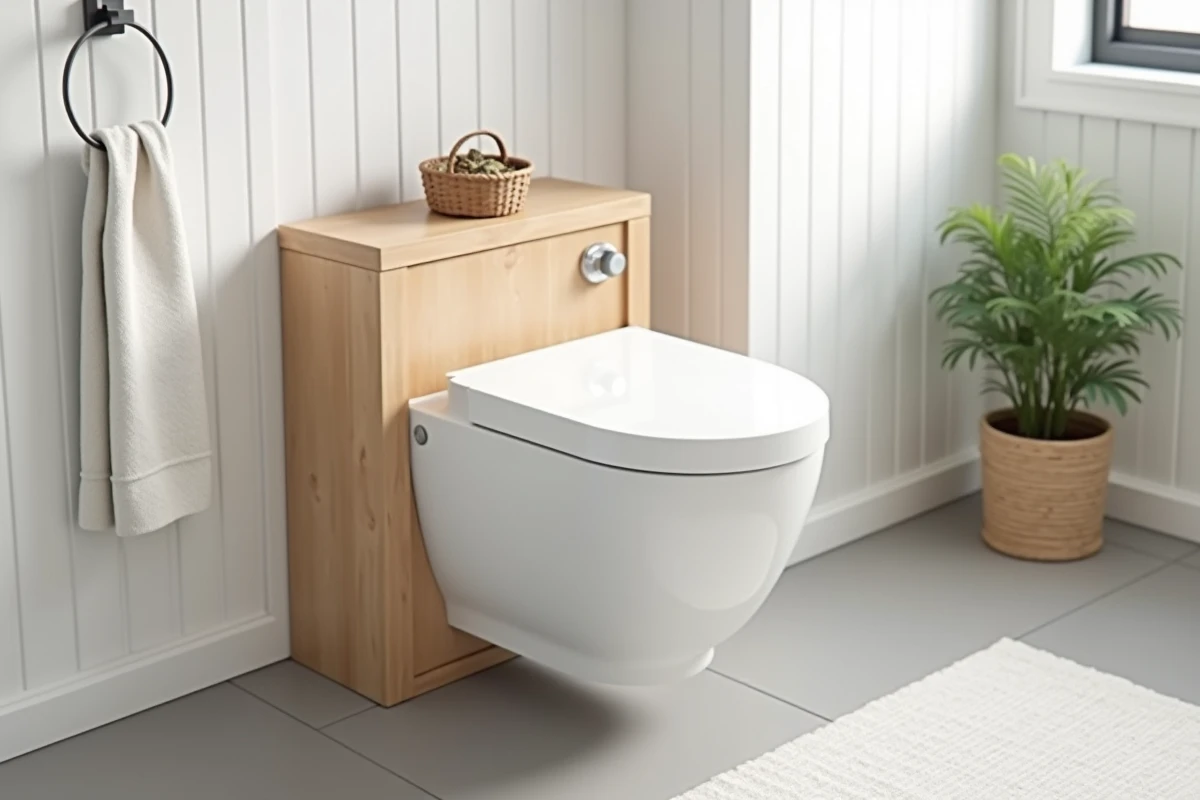
Dry toilets operate without connection to the water network or flush. The principle relies on covering the waste with a carbonaceous bedding (wood chips, sawdust) that initiates a composting process and neutralizes odors. IKEA does not manufacture dry toilets, but several of its modular furniture pieces serve as a base for functional setups adopted in alternative habitats as well as in traditional homes.
Carbonaceous bedding and separation of waste: the mechanism to understand before purchase
A dry toilet with biomat bedding relies on a balance between nitrogen (provided by urine and feces) and carbon (provided by chips or sawdust). The addition of bedding after each use blocks anaerobic fermentation, which produces unpleasant odors.
The collection bucket receives all deposits. When it is full, its contents go to an outdoor composting bin where decomposition continues over several months. The ventilation of the system, even passive, accelerates drying and further limits odor nuisances.
This operation explains why the choice of container, bedding, and ventilation system matters more than the brand of furniture that outfits the installation. This is precisely where IKEA elements come into play: they provide the structure, not the technology.
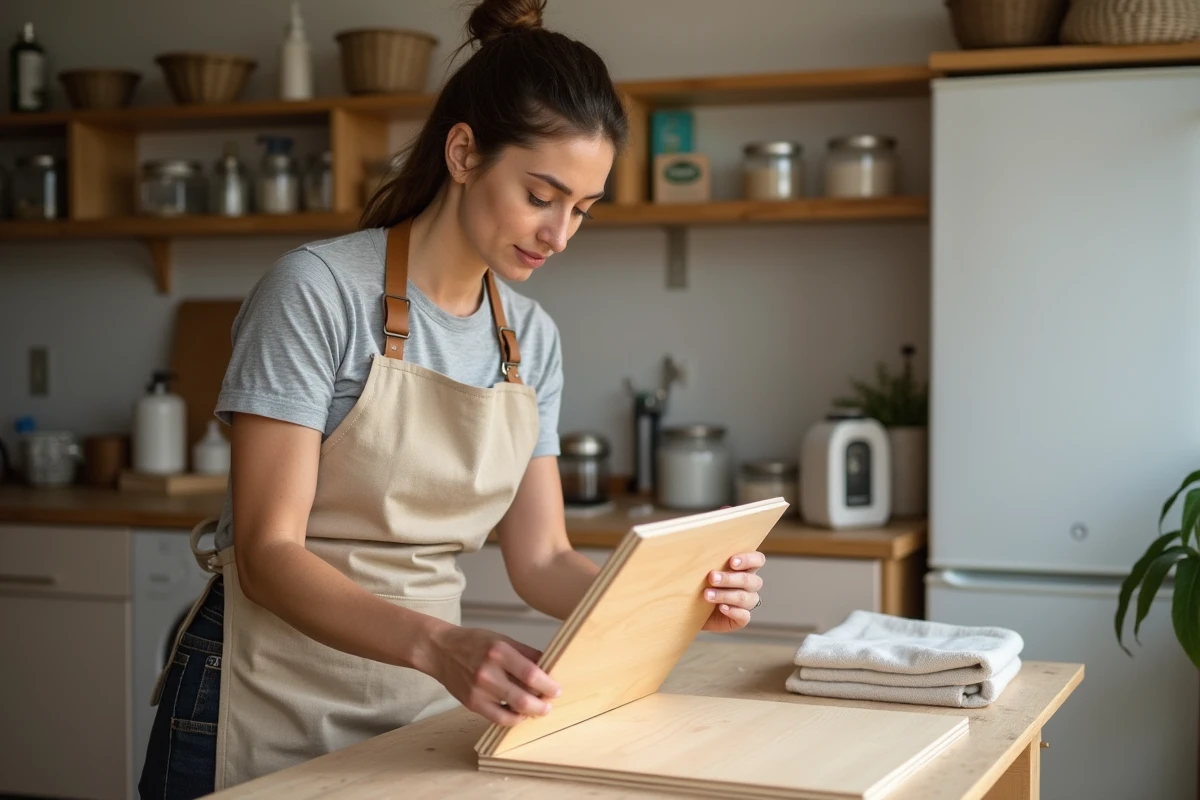
To better understand the assembly possibilities, the IKEA dry toilet kit details the references for boxes and accessories compatible with a standard bucket.
IKEA furniture repurposed as dry toilets: which boxes really work
Several IKEA storage boxes have the necessary dimensions to accommodate a collection bucket and support the weight of an adult. The KNAGGLIG box in untreated pine has long been a favorite among DIYers, particularly in the German-speaking community.
The approach is the same regardless of the chosen model:
- Cut a circle in the top of the furniture, adjusted to the diameter of the bucket, and then sand the edges to attach a standard toilet seat.
- Treat the wood with a moisture-resistant food-grade oil or varnish, as untreated raw wood absorbs liquids and degrades within a few months.
- Add a ventilation pipe (PVC plumbing type) connected to the bottom or back of the box to expel humid air outside.
Since 2023, IKEA Germany has modified the product sheets of certain storage furniture to specify that they are not designed for the collection of organic waste. This update encourages checking the load capacity of the furniture and reinforcing the structure if necessary, for example by screwing in internal battens.
Limitations of this approach
An IKEA piece of furniture remains a piece of furniture. The quality of assembly entirely depends on the person modifying it. A poorly ventilated or poorly sealed box generates odors, regardless of the price of the original furniture. The financial savings are real compared to a commercial dry toilet, but the time spent on construction and the risk of error partially offset this economy.
French regulations and dry toilets in primary residences
Installing dry toilets in a primary residence in France has long been subject to regulatory ambiguity. The situation evolved between 2022 and 2024 thanks to the joint work of the National Agency for the Cohesion of Territories (ANCT) and Ademe around the Non-Collective Sanitation standard (NF DTU 64.1).
Recent guides from Ademe specify that dry toilets with bedding can equip a primary residence under certain conditions: proper management of effluents, composting that respects maturation cycles, and correct ventilation of the system. This clarified framework reassures homeowners who hesitated to take the plunge.
In practical terms, the compost from dry toilets cannot be spread just anywhere. It must mature long enough (the duration depends on the volume and climatic conditions) and cannot be used on food crops during the active maturation phase. Failure to comply with these rules exposes one to a refusal during the inspection by the non-collective sanitation public service (SPANC).
Maintenance and odor management on a daily basis with a home kit
The frequency of emptying the bucket varies according to the number of users. For a household of two people, replacement occurs on average every three to five days. A ready-to-use replacement bucket, with a base of chips, simplifies rotation.
Odor management relies on three levers:
- The amount of bedding: a sufficient layer of chips after each use cuts off contact between air and waste, stopping emissions.
- Ventilation: a passive extractor (PVC pipe with a roof cap) creates a natural draft that pulls air from the bucket outside. Without this draft, even abundant bedding is insufficient in summer.
- Cleaning the bucket: rinsing with white vinegar after each emptying eliminates residues and prevents buildup.
Regular maintenance makes dry toilets as odor-neutral as a conventional toilet. The problem almost always arises when the bedding is underdosed or ventilation is absent.
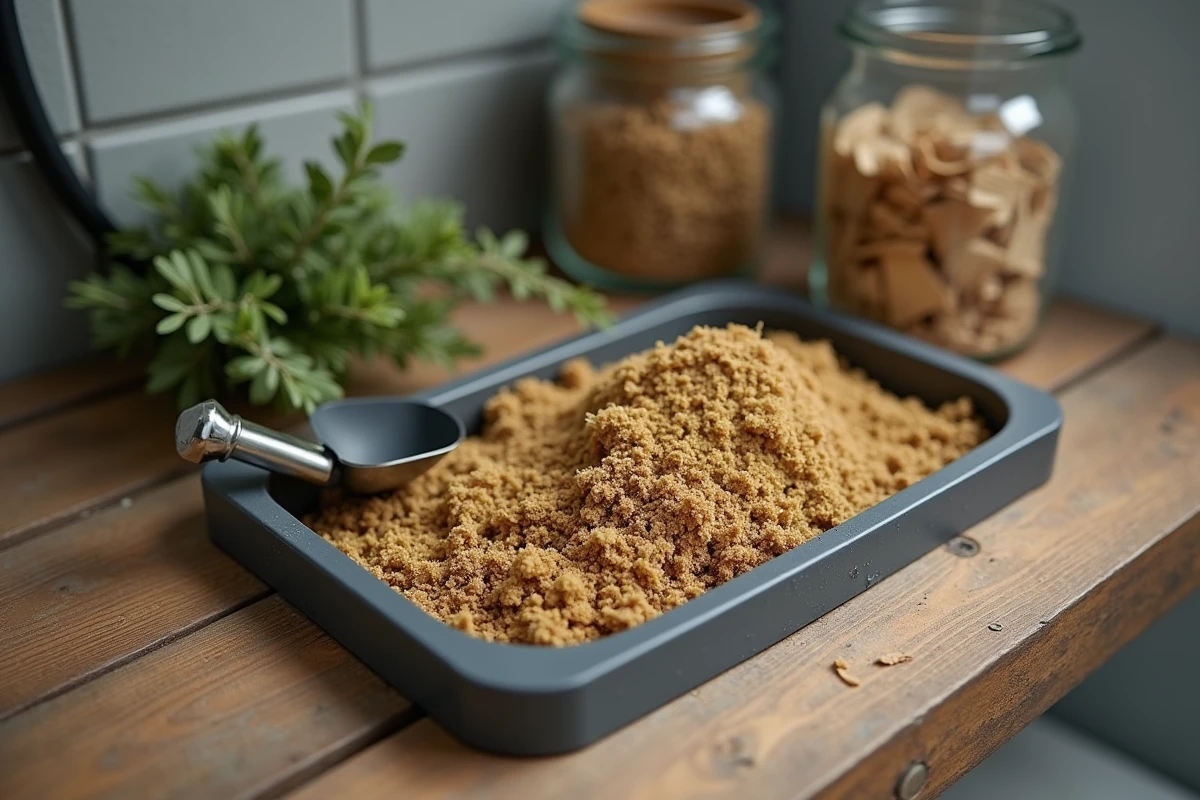
The choice between wood chips and sawdust depends on local availability. Chips provide better aeration of the mixture, while sawdust absorbs liquids more quickly. Some users combine both, with a base of chips and a finishing layer of fine sawdust.
A home kit built on an IKEA box serves the same functions as a commercial model, provided these principles of ventilation and bedding are respected. The difference lies in the finish, durability of the wood, and ease of disassembly for cleaning, three points that any DIYer can improve over time without replacing the entire system.