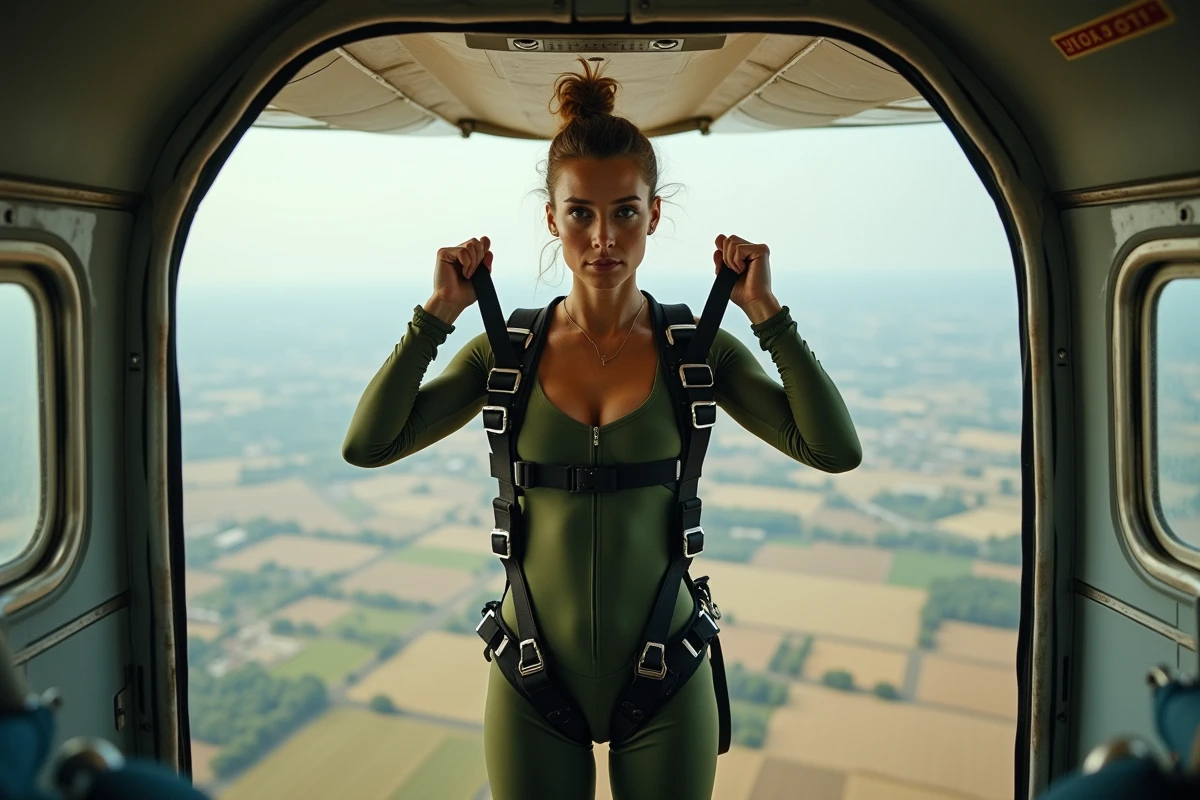
A tandem parachute jump rarely lasts more than a minute in free fall. Yet, one often emerges with trembling legs, heavy arms, and a fatigue comparable to that of sustained physical effort. The question of caloric expenditure during a parachute jump deserves to be asked by distinguishing each phase, from the ground briefing to landing.
Physiological stress and calories: what really happens in the body during a jump
Even before leaving the plane, the body goes into alert mode. The adrenaline rush accelerates the heart rate, contracts the muscles, and increases oxygen consumption. This is not a classic muscular effort; it is a nerve activation that consumes energy without us realizing it.
This stress response mobilizes the sympathetic nervous system. The body releases cortisol and adrenaline, which causes the metabolism to run faster throughout the entire experience. This expenditure is often compared to that of standing under tension, not to a sprint or a swimming session.
The majority of caloric expenditure during a parachute jump does not come from intense muscular work, but from overall bodily tension. The muscles of the arms, thighs, and torso contract to maintain the falling posture, without producing large movements.
We are closer to isometric exercise than to endurance sports. To better understand the carbon footprint of a parachute jump, one must look beyond the mere minute of free fall.
Caloric expenditure by phase: briefing, ascent in the plane, free fall, and landing
Articles discussing calories burned while parachuting treat the jump as a single block. In practice, the complete experience lasts much longer than the free fall itself.
The briefing and waiting on the ground
We stand, put on the harness, and listen to the instructions. The stress level gradually rises. The waiting generates passive muscle tension that, accumulated over one to two hours, contributes to the total expenditure. The body consumes more than at rest, without any actual sports movement taking place.
The ascent in the plane
Sitting in a cramped plane, the muscles remain contracted. The heart rate accelerates as altitude increases. This phase usually lasts longer than the free fall itself, and the metabolism remains elevated throughout.
The free fall
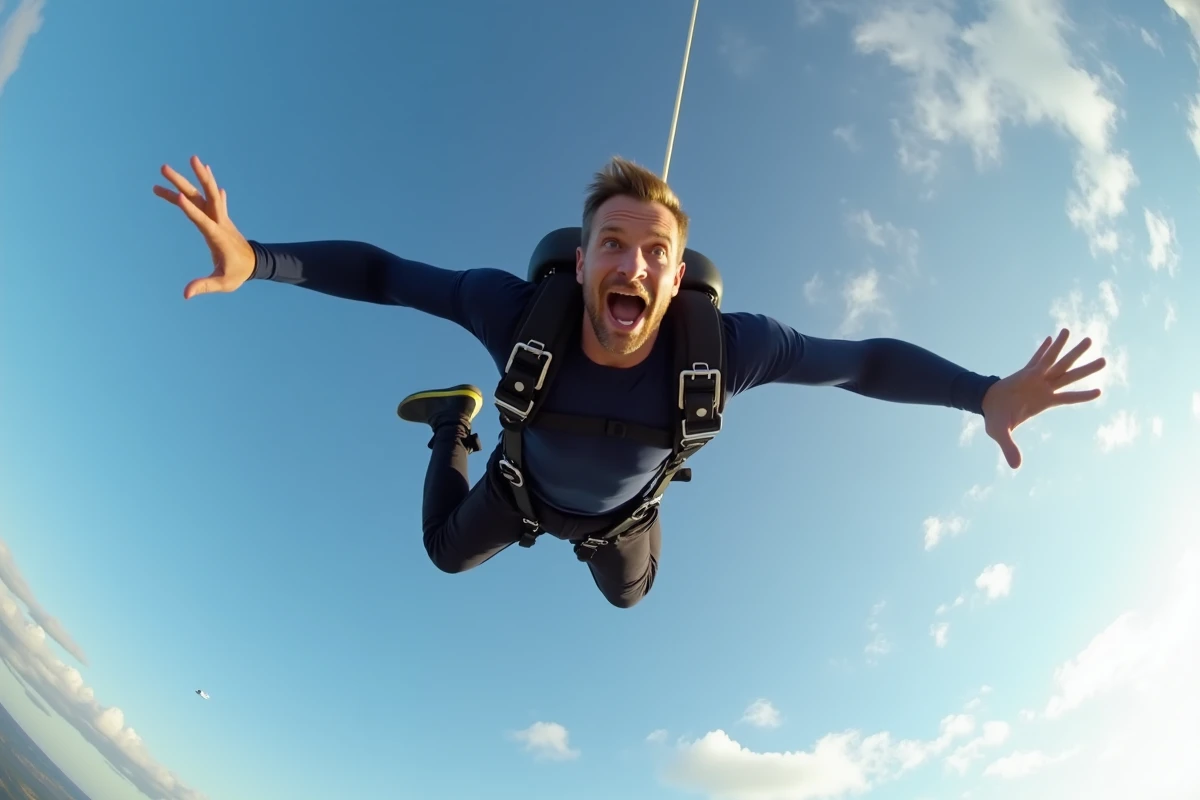
This is the most intense phase. The body experiences air resistance, which forces it to maintain a curved posture by contracting the arms, back, and thighs. The high-speed wind exerts pressure on the entire body. The expenditure per minute is the highest of the entire jump, but the duration remains short.
The flight under canopy and landing
Under the parachute, the descent is calmer. However, the legs must prepare for the impact with the ground. The landing engages the quadriceps and calves to absorb the shock. After landing, the body continues to consume more energy than at rest for several minutes, until the heart rate decreases.
Body weight and equipment: the variables that change everything
Energy expenditure tables by activity, such as those published by the University of Montreal (Ainsworth et al., 2000), remind us of a basic rule: the higher the weight, the greater the caloric expenditure for the same activity. This is also true for parachuting.
A jumper wearing full tandem equipment (harness, jumpsuit, helmet) adds several kilos to their body mass. This extra weight forces the muscles to exert a more significant postural maintenance effort during each phase of the jump.
The factors that vary the expenditure from one jumper to another include:
- Body weight, which directly affects the energy needed to resist air pressure in free fall
- The level of stress felt, which influences the amount of adrenaline released and thus the acceleration of metabolism
- The total duration of the experience, including briefing and waiting, which can vary from one to three times depending on the parachuting centers
- The outside temperature at altitude, as the body expends more energy to maintain its temperature in a cold environment
Feedback varies on this point: some jumpers describe fatigue comparable to a moderate workout, while others feel it is barely more than a brisk walk. The difference often lies in the level of anxiety before the jump.

Parachuting compared to classic physical activities
Reference tables in sports physiology rank activities according to their MET (metabolic equivalent) value. An activity at 3 MET burns three times more than at rest. Normal walking is around 3 MET, light jogging at 7 MET, and moderate effort alpine skiing at 6 MET.
Parachuting, during the free fall phase alone, mobilizes the body at an intensity level comparable to an activity between alpine skiing and brisk walking. Isometric muscle contraction and the stress response place the effort in a moderate MET range.
The real difference with a classic sport is the duration. A swimming or cycling session lasts thirty minutes to an hour. The free fall lasts only a fraction of that time, which mechanically limits the total caloric expenditure. When averaged per minute, the effort is significant. When averaged over the entire session, it remains below most moderate-intensity sports activities practiced for half an hour.
What makes parachuting interesting from a physical standpoint is not the raw number of calories. It is the simultaneous engagement of nearly all muscle groups under stress, a type of effort that few classic sports activities replicate. Parachuting remains primarily a controlled stress experience that stimulates the body far beyond what its short duration would suggest.