The classic recommendations on learning to walk waver when a simple ball enters the scene. Early childhood professionals are shaking up habits and proposing this playful object as an ally for the first steps. Recent studies point to unexpected benefits for motor coordination. Yet, few parents spontaneously associate the ball with the discovery of walking. The results observed in the field call into question the established standards of toddler motor skills.
The use of the ball to accompany the first movements remains uncommon. However, testimonials and field observations are piling up: enhanced balance, increased confidence, emerging autonomy. This clever diversion of a familiar object is beginning to attract the attention of physiotherapists and motor development specialists, eager to renew their approaches.
Why walking is a key milestone in a baby’s development
For a toddler, walking is not just about putting one foot in front of the other. It marks the beginning of a conquest, a transformation in the relationship to space and others. Motor development engages the entire organism: muscles, brain, posture, perception. When a baby takes off, everything orchestrates to find balance, adjust supports, and sense verticality. Before these first steps, there is the time of crawling, of getting on all fours, of attempts to stand up. Each stage sharpens overall motor skills and refines bodily sensitivity.The environment in which the child develops influences the speed of learning. Some little ones venture to stand before their first birthday, while others prefer to observe and manipulate before launching themselves. It is impossible to impose a timeline: each child progresses at their own pace. Montessori-inspired pedagogies emphasize autonomy and confidence. Allowing the child to explore, fall, and try again enables them to tame their own limits and learn to persevere.Learning to walk with a ball is generating increasing interest. This game, more strategic than it seems, invites the child to test their posture, coordinate their movements, and master balance. Sessions around the ball transform the conquest of walking into a sensory game, where each attempt becomes a small victory over weightlessness.
Learning to walk with a ball: myth or real boost?
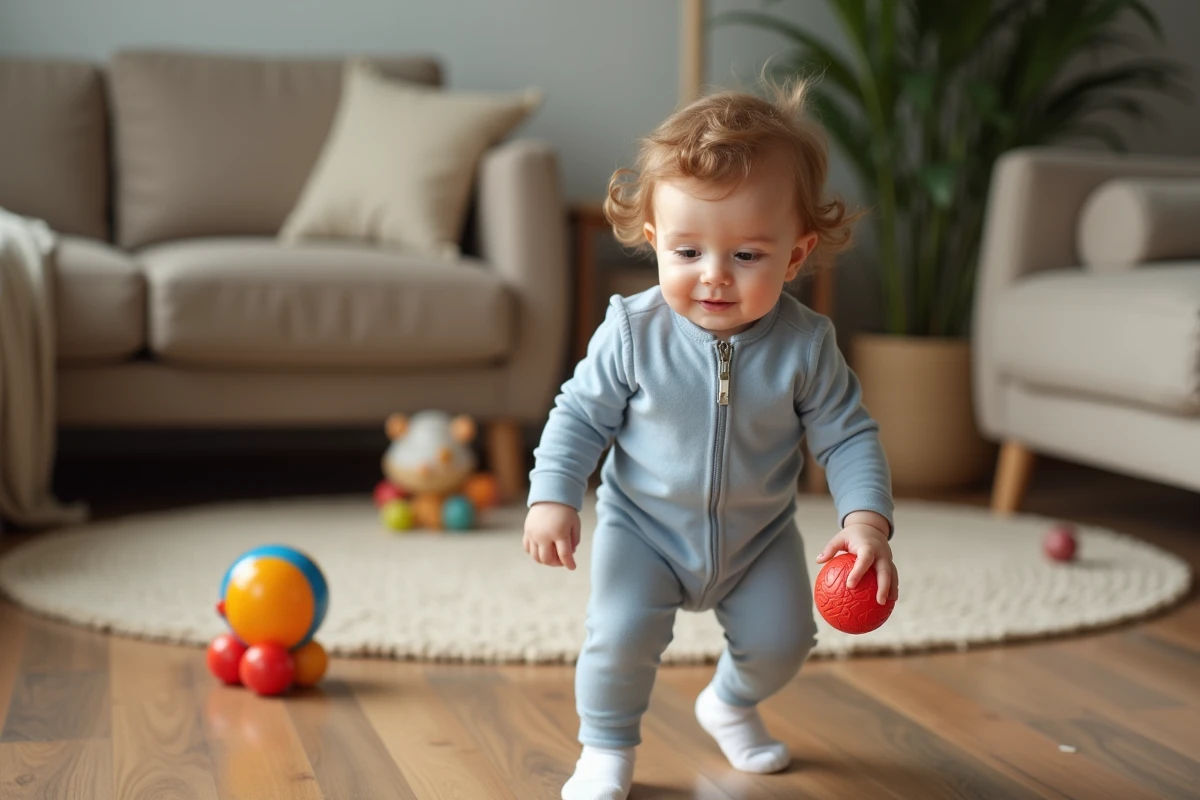
The ball, much more than a play accessory, sometimes establishes itself as a learning partner. As soon as a baby tries to push it, grab it, or roll it, they activate reflexes, coordination, and balance. Placed on the ground, the ball invites the child to adjust their ventral posture, engage their supports, and experiment with transitioning to standing, then to the first, sometimes hesitant, steps. Playing with a ball is not just entertainment. It is also a field of exploration to discover one’s bodily resources. Moments of sensory play ignite curiosity, strengthen confidence, and inspire boldness. Montessori recommendations emphasize this sensory approach: choosing a grasping ball suited to small hands helps stimulate motor skills, spatial orientation, and balance management.
Here are some concrete situations where the ball plays a role in learning to walk:
- Lateral movement around the ball: engages the muscles that stabilize the body.
- Pushing the ball: encourages coordination between arms and legs.
- Catching and then releasing: develops fine motor skills and the grasping gesture.
Introducing the ball into the learning of walking is not a gimmick. It is one tool among others that helps support progress without rushing the child’s natural rhythm.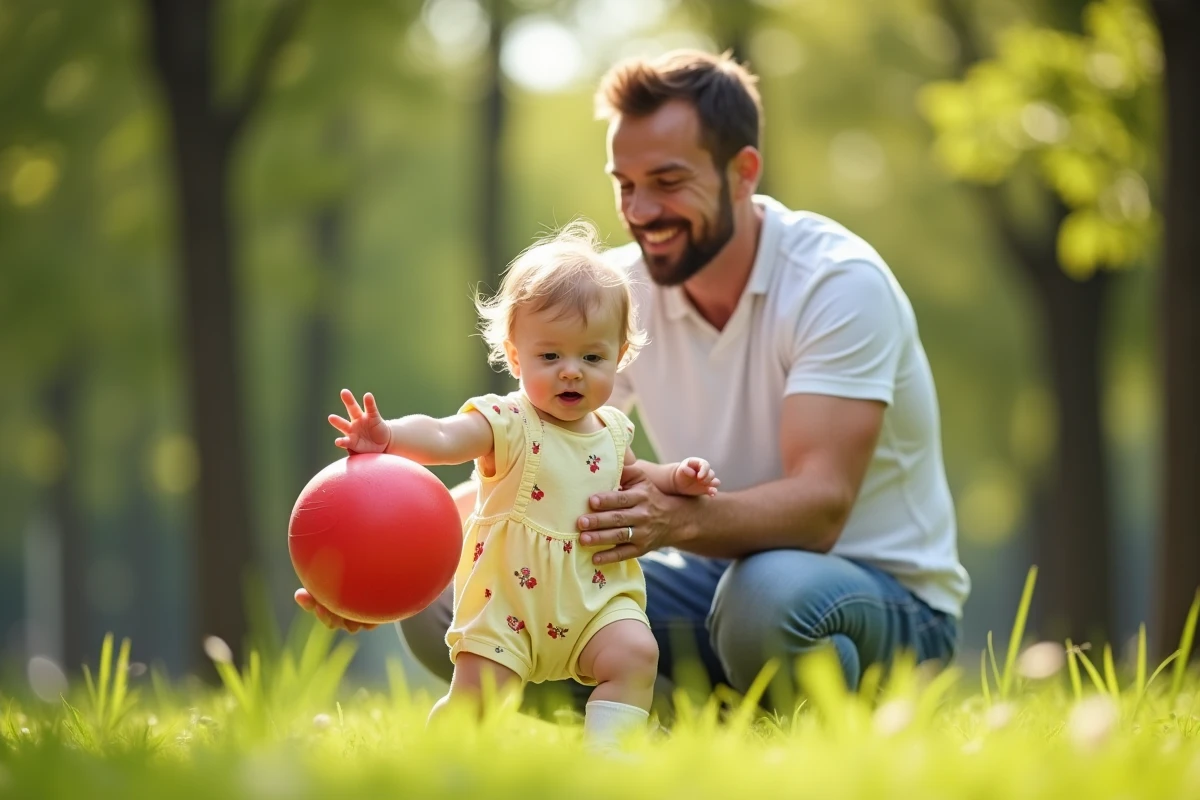
Practical tips to support your child with gentleness and confidence
To encourage your baby in their discoveries, a few adjustments can make all the difference: clear space, stable floor, soft light, varied textures. A grasping ball suited to the child’s size and strength facilitates handling. Natural materials, validated by motor development professionals, should be prioritized. Montessori pedagogy inspires this choice: a lightweight and easy-to-grab ball stimulates fine motor skills and encourages autonomy. Observe how your child engages with the ball. Let them decide: they can roll it, push it, catch it, or let it go… Each gesture reinforces bodily confidence. You can suggest simple sensory play: roll the ball slowly in front of them, place it a short distance away to encourage them to move forward. There is no need to rush the movement: each child progresses at their own pace.
To support the discovery, here are some concrete suggestions for parents:
- Place the ball in different locations to invite your baby to change supports and explore the space.
- Give them time to take breaks, allowing them to gradually integrate each new skill.
- Value every attempt, even clumsy ones, to boost their self-confidence.
Interaction with the ball then becomes a valuable opportunity: coordination, balance, movement management. The discreet and attentive presence of the adult, without excessive intervention, provides a reassuring environment. An encouraging glance, a soft voice, and respecting the child’s pace: everything hinges on these details. It is in this dynamic that the great adventure of walking is built, step by step.